
 Pin it
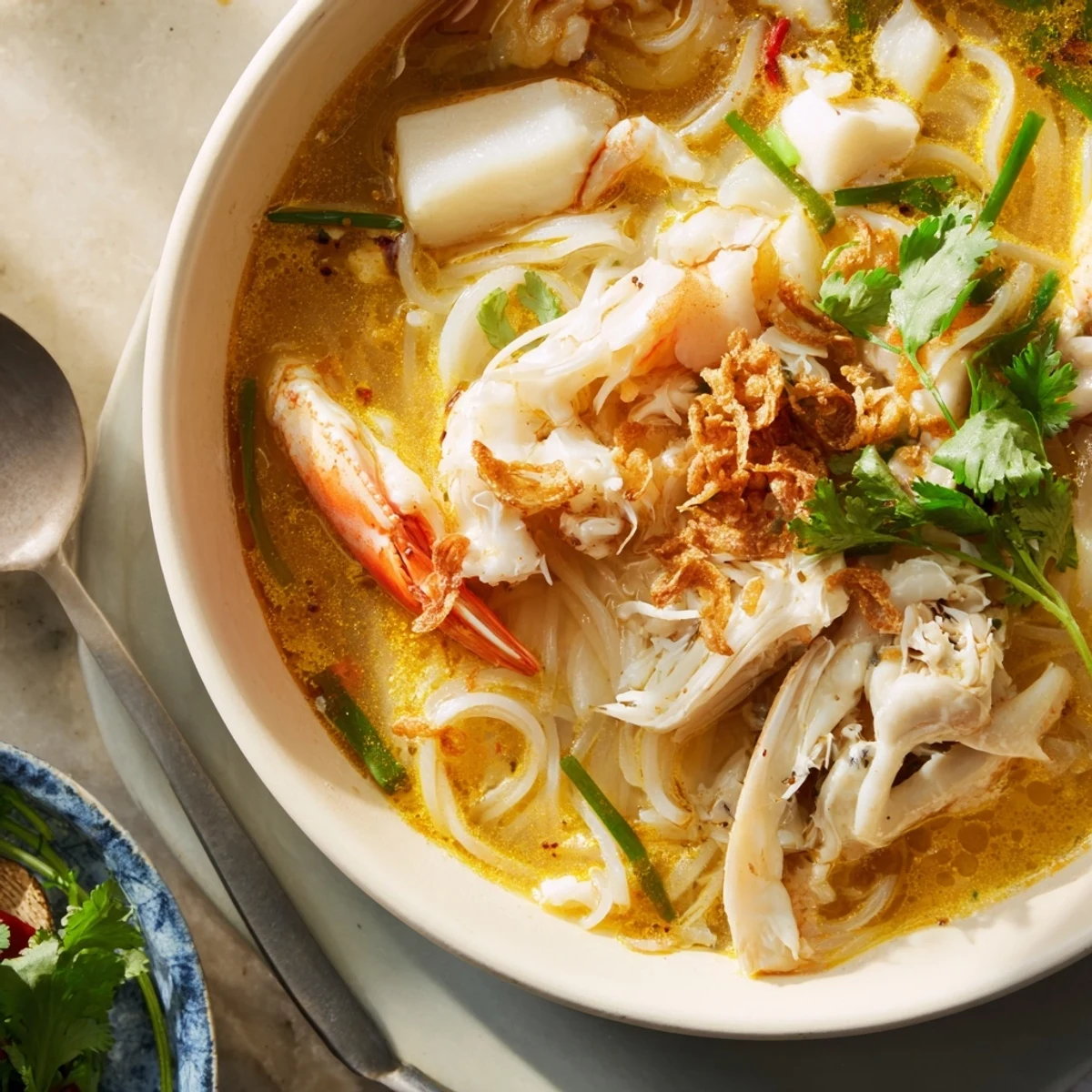
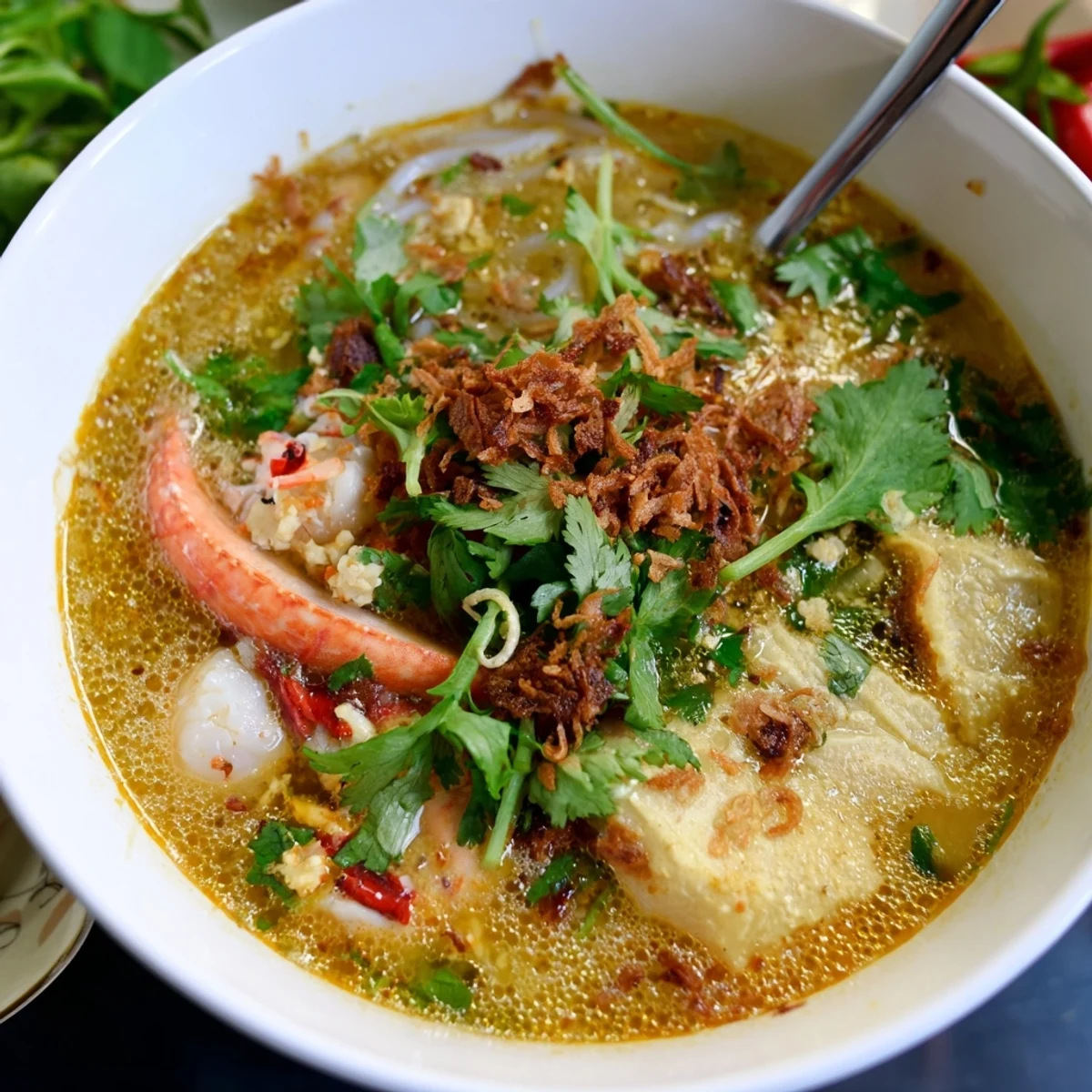
 This beloved Vietnamese soup combines thick, chewy tapioca noodles with succulent crab meat, plump shrimp, and sliced fish cakes in a deeply savory broth. The aromatic base simmers with pork bones, onion, and garlic, infused with fish sauce for that signature umami depth. Perfect for family dinners, the dish comes together in just over an hour and serves four generously. Customizable garnishes like fried shallots, fresh cilantro, and lime wedges let everyone adjust their bowl to taste.
The steam rising from my grandmothers kitchen always meant something special was happening. She would stand over her largest pot, coaxing deep flavors from humble ingredients, and that particular fragrance of crab simmering with aromatics still pulls at me decades later. This banh canh cua brings that same warmth into my own home now, transporting me back to her small kitchen where every bowl told a story.
Last winter when my friend Sarah was recovering from surgery, I brought over a steaming pot of this soup. She took one sip of that fragrant broth and her eyes actually welled up, reminding me how food carries memory and comfort in equal measure. Now whenever I make banh canh cua, I think of her sitting at my kitchen table, wrapped in a blanket, slowly finding her way back to herself one bowl at a time.
Ingredients
- 1.2 liters chicken stock: Using homemade stock adds incredible depth, but a good quality store-bought version works perfectly fine
- 400 g pork bones: Blanching these first removes impurities and keeps your broth clear and clean tasting
- 1 yellow onion: The natural sweetness from onion is essential for balancing the briny crab notes
- 2 cloves garlic: Smashed garlic releases its oils more readily, infusing the broth with gentle aromatic flavor
- 1 tbsp fish sauce: This is the salt of Vietnamese cooking, adding umami that plain salt cannot achieve
- 300 g fresh crab meat: Fresh crab is worth seeking out here, though good quality frozen crab works in a pinch
- 150 g shrimp: These cook quickly and add sweet bites of seafood throughout the bowl
- 200 g fish cakes: Slice these about half a centimeter thick so they warm through without falling apart
- 400 g banh canh noodles: Fresh noodles are ideal, but frozen ones thaw beautifully and taste almost identical
- 2 tbsp fried shallots: Make these in advance or buy them pre-made, they add crucial crispy texture
- 1 small bunch cilantro: Fresh herbs brighten the rich broth and add a pop of color to each bowl
Instructions
- Build your foundation:
- Combine the chicken stock, blanched pork bones, onion halves, smashed garlic, salt, and sugar in your largest soup pot. Bring everything to a rolling boil, then immediately reduce heat to maintain a gentle simmer for 30 minutes, skimming any foam that rises to the surface.
- Season the broth:
- Stir in the fish sauce, then carefully remove the pork bones and onion pieces using a slotted spoon or tongs. Your broth should now have a beautiful golden hue and smell absolutely incredible.
- Cook the shrimp:
- Add the peeled shrimp to the simmering broth and cook for just 2 to 3 minutes until they turn pink and opaque. Remove them immediately with a slotted spoon and set aside on a plate.
- Infuse crab flavors:
- Gently add the crab meat and sliced fish cakes to the seasoned broth, letting them simmer for 5 to 7 minutes. The crab will release its sweet essence into the liquid, creating that signature taste.
- Prepare the noodles:
- Cook your banh canh noodles according to the package directions, then drain and rinse them briefly with cool water. This quick rinse stops the cooking process and prevents those thick noodles from clumping together.
- Assemble each bowl:
- Divide the cooked noodles among four serving bowls, then arrange the shrimp, crab meat, and fish cakes on top. Ladle the hot broth generously over everything, making sure each bowl gets plenty of seafood.
- Add the finishing touches:
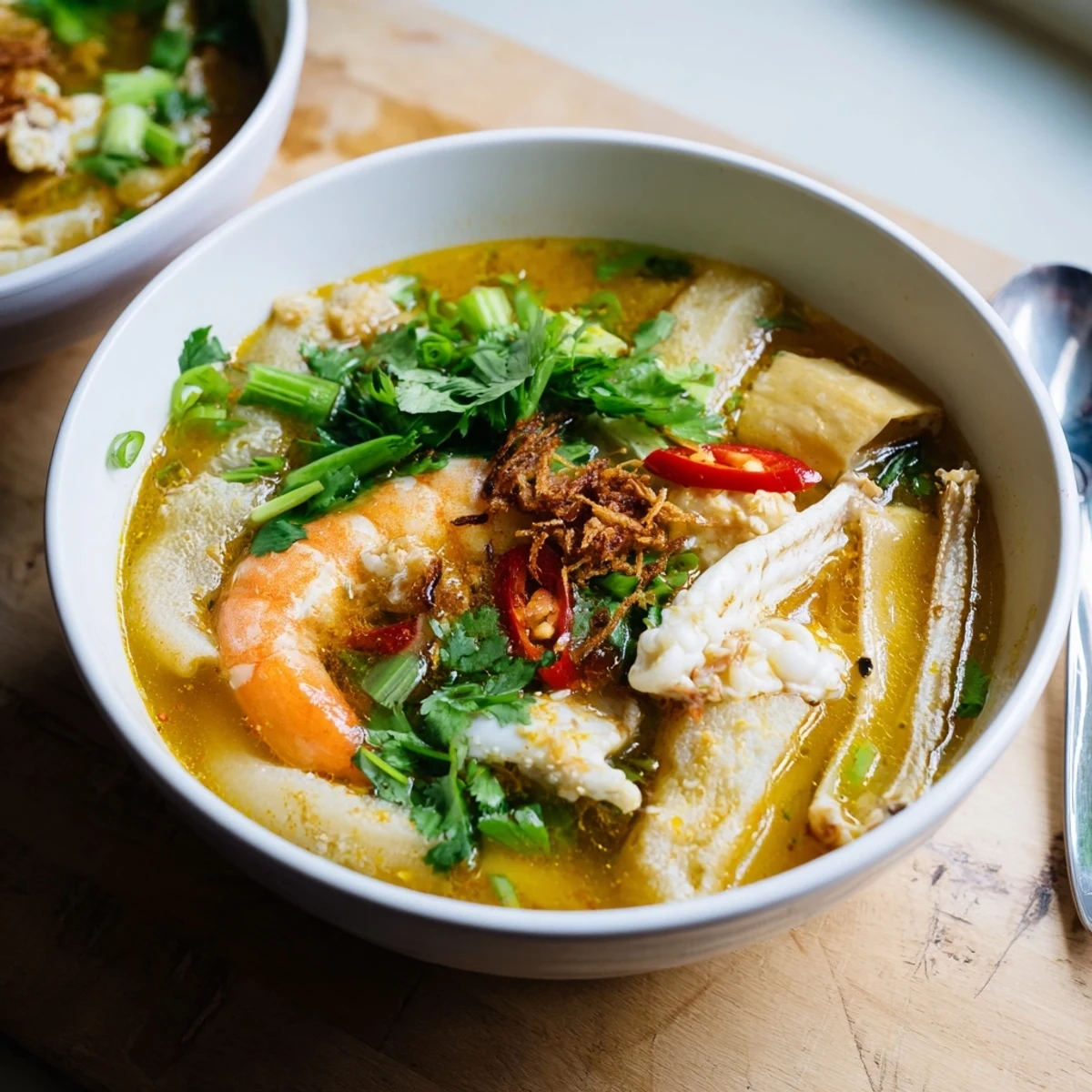
- Scatter spring onions, fried shallots, cilantro, and sliced chili over each bowl. Serve with lime wedges on the side and let everyone add their own fresh ground black pepper at the table.
 Pin it
 There is something almost meditative about preparing a dish that requires this kind of attention, this gentle coaxing of flavors from simple ingredients. My partner now asks for this soup whenever the weather turns gray, and I have learned that the ritual of making it is just as nourishing as the eating.
Finding the Best Crab
Live crab at Asian markets is often the freshest option, but picking through all that meat takes time I rarely have on a weekday. I have discovered that asking the fishmonger to steam and clean the crab for you saves tremendous effort while still yielding that sweet fresh flavor. Good quality pasteurized crab from the refrigerated section works beautifully too, just avoid the canned stuff if you can help it.
Broth Depth
The secret to restaurant quality broth lies in that initial simmer with pork bones, even though they get removed before serving. My grandmother taught me to never rush this step, and she was right, those 30 minutes of gentle bubbling make all the difference in the world. Sometimes I add a small piece of rock sugar along with the white sugar for a more rounded sweetness that complements the crab.
Noodle Wisdom
Fresh banh canh noodles are worth seeking out at your local Asian grocery, but frozen ones work remarkably well when you cannot find them fresh. The trick is to rinse them thoroughly after cooking to remove excess starch.
- Keep a small pot of boiling water on the side to refresh noodles if they start sticking together while you assemble
- If your noodles seem too thick or starchy, give them an extra quick rinse before adding to bowls
- Never cook noodles in the soup itself or your broth will become cloudy and overly thick
 Pin it
 This soup has become my answer to almost everything, bad days, good days, days when I need to feel connected to something larger than myself. I hope it finds a place in your kitchen too.
Recipe FAQs
- → What makes banh canh noodles different from other Vietnamese noodles?
-
Banh canh noodles are made from tapioca and rice flour, giving them a distinctively thick, chewy texture that holds up beautifully in hot broth. Unlike delicate rice vermicelli or springy egg noodles, these opaque white noodles have a satisfying bite and slightly slippery surface that helps them absorb flavors.
- → Can I use imitation crab if fresh crab isn't available?
-
Yes, imitation crab or surimi works well as a substitute and is actually commonly used in home-style versions. For the best flavor and texture, look for high-quality imitation crab made from white fish. You can also use cooked crab claws or canned crab meat in a pinch.
- → How do I prevent the noodles from sticking together?
-
After cooking, drain the noodles and rinse them lightly under cool water to remove excess starch. Toss with a tiny amount of oil if not serving immediately. When assembling bowls, ladle hot broth over the noodles immediately to keep them separate and warm.
- → What can I substitute for fish cakes?
-
Fish cakes add texture and subtle sweetness, but you can substitute sliced firm tofu, more shrimp, or omit them entirely. Some home cooks add thinly sliced pork loin or quail eggs for extra protein variation.
- → How long does the broth keep in the refrigerator?
-
The broth can be made ahead and stored in an airtight container for 3-4 days. However, for the best texture, cook the noodles fresh when serving. If storing leftovers, keep noodles separate from broth to prevent them from becoming mushy.
- → Is this dish gluten-free?
-
The traditional banh canh noodles and fresh ingredients are naturally gluten-free. However, fish cakes and some commercial fish sauces may contain gluten. Check labels carefully and use certified gluten-free fish sauce if needed.