
 Pin it
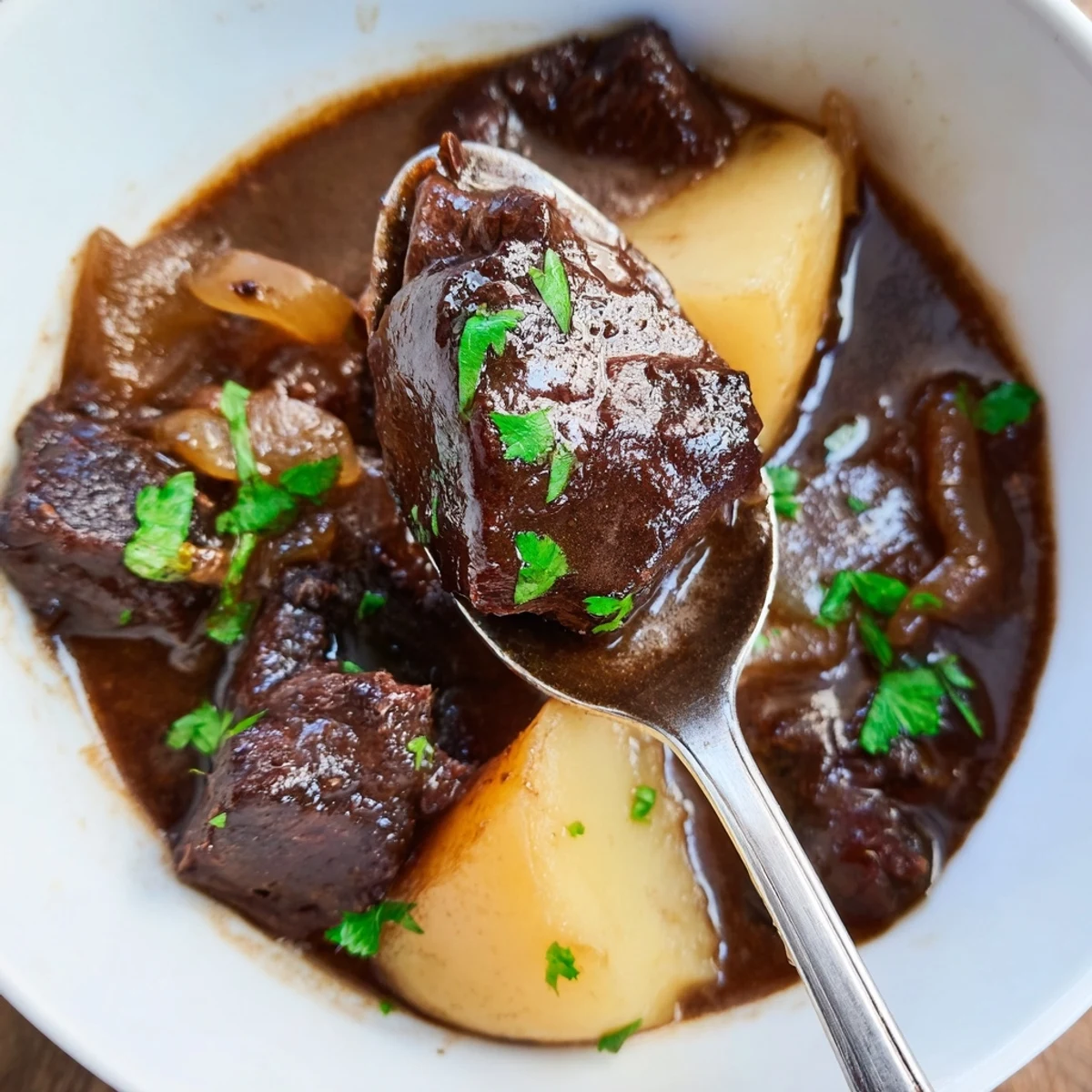
 This hearty stew features tender beef cubes simmered slowly with onions, carrots, parsnips, celery, and potatoes. The rich, malty flavor comes from a non-alcoholic stout combined with tomato paste and Worcestershire sauce, creating depth without traditional alcohol. Seasoned with thyme, bay leaves, salt, and pepper, it offers a warming, robust dish ideal for cooler days. Garnish with fresh parsley and serve with crusty bread for a complete, satisfying meal.
There's something about the smell of beef browning in a hot pot on a grey afternoon that pulls you straight into comfort mode. I discovered this stew by accident—I had beef, root vegetables, and a craving for something with real depth, but no wine in the house. Instead of reaching for the usual suspects, I grabbed a non-alcoholic stout and realized it gave the broth the exact malty richness I'd been chasing. Two hours later, my kitchen smelled like a proper Irish pub, and no one even noticed the alcohol was missing.
I made this for my sister on one of those nights when the wind was rattling the windows and we both needed something warm that wasn't just functional—it was an excuse to sit at the table longer than usual. She asked for seconds before I'd even finished plating, and we ended up talking until the pot was nearly empty. That's when I knew this stew had become one of those recipes I'd make again and again.
Ingredients
- Beef chuck or stewing beef (1 kg / 2.2 lbs), cubed: Buy the fattier cuts—they become impossibly tender and add richness the lean stuff never will.
- Onions, carrots, parsnips, celery, and garlic: These aren't just flavor—they're the foundation that makes the broth taste like it's been building for hours.
- Potatoes (3 medium): Cut them into honest chunks so they stay distinct in the stew rather than dissolving into the broth.
- Non-alcoholic stout or malt beverage (500 ml / 2 cups): This is the magic—it brings umami and a slight bitterness that makes beef taste even more like beef.
- Beef stock (500 ml / 2 cups): Use low-sodium so you control the salt level as the stew reduces.
- Tomato paste (2 tbsp): A small amount deepens the color and adds subtle sweetness without making this taste like tomato sauce.
- Worcestershire sauce (2 tbsp), alcohol-free: Double-check the label—this brings a salty, tangy note that ties everything together.
- All-purpose flour (3 tbsp): This dusts the beef and acts as a gentle thickener without making the sauce feel heavy.
- Fresh thyme and bay leaves: Thyme brightens the earthiness, bay leaves add a subtle herbal note that softens the richness.
- Vegetable oil (3 tbsp): You'll need this for browning in batches—don't skip the browning step or you'll lose that caramelized depth.
Instructions
- Prep and dry your beef:
- Pat the cubes completely dry with paper towels before tossing with flour, salt, and pepper. Dry beef browns better, creating that golden crust that makes your kitchen smell extraordinary.
- Brown the beef in batches:
- Heat oil until it shimmers, then work in batches so the pot isn't crowded—crowded beef steams instead of sears. Transfer each batch to a plate and resist the urge to rush.
- Build flavor with vegetables:
- Once the beef is out, add onions, carrots, parsnips, celery, and garlic to the same pot. Scrape up every browned bit stuck to the bottom—that's concentrated flavor you earned. Sauté for about five minutes until the onions begin to turn translucent.
- Add tomato paste and let it bloom:
- Stir it in and cook for one full minute. This small step changes everything, turning the paste from raw and sharp into something deeper and more complex.
- Bring it all together:
- Return the beef, add the non-alcoholic stout, stock, Worcestershire, thyme, and bay leaves. Give it a good stir and bring to a gentle simmer—not a rolling boil, which toughens the meat.
- Low and slow for the first stretch:
- Cover and let it simmer for ninety minutes on low heat, stirring now and then. The beef will soften, the broth will darken, and your whole house will smell like dinner's already being celebrated.
- Add potatoes and finish:
- After ninety minutes, add potato chunks and simmer covered for another forty minutes until the beef is genuinely tender and the potatoes have softened without falling apart. Taste and adjust salt and pepper as needed—the stew should taste bold and savory.
- Garnish and serve:
- Fish out the bay leaves, ladle into bowls, and scatter fresh parsley on top. Serve with crusty bread for soaking up every drop.
 Pin it
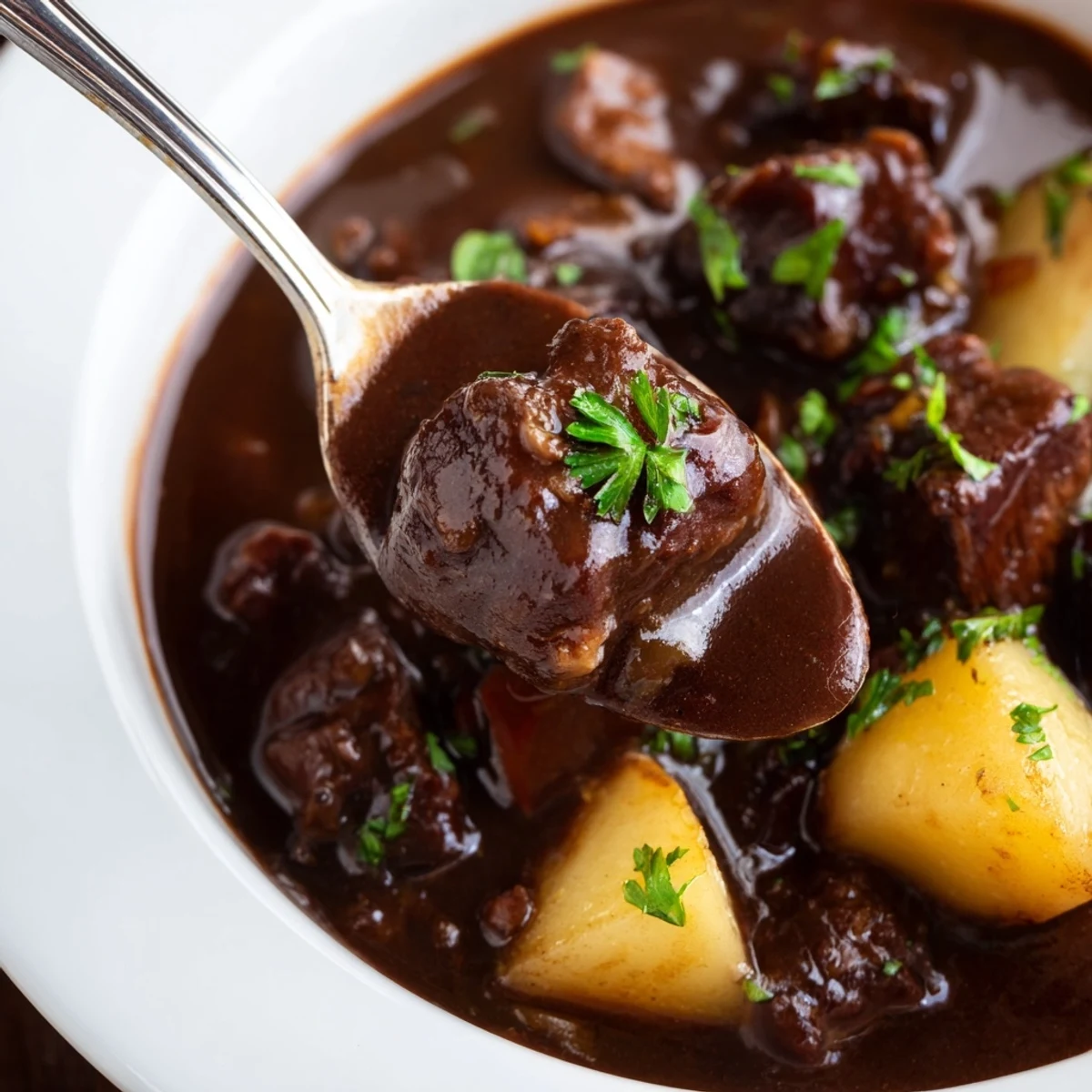
 There's a moment near the end of cooking when you lift the lid and the steam hits your face, carrying that rich malty aroma, and you realize this dish has become something bigger than the sum of its parts. That's when you know it's ready.
Why the Non-Alcoholic Stout Works
Non-alcoholic stout brings a depth that ordinary beef broth simply can't touch. The malt brings sweetness and body, while the roasted grain character adds a subtle bitterness that makes the beef flavors pop in unexpected ways. It's the secret that makes people ask what's in your stew without being able to quite name it.
Vegetable Swaps and Variations
Parsnips are my preference, but turnips work beautifully if that's what you have. Root vegetables are forgiving in stews—they all soften beautifully and add their own subtle sweetness to the broth. You can also add mushrooms if you want more earthiness, or swap celery for leeks if that feels right in the moment.
Serving Suggestions and Make-Ahead Magic
This stew actually tastes better the next day once the flavors have had time to meld and deepen. Make it ahead, refrigerate it, and reheat gently on the stove. It also freezes beautifully for up to three months, which means you can have a bowl of proper comfort waiting whenever you need it most.
- Serve with crusty bread, a simple green salad, or even over mashed potatoes for something even heartier.
- A splash of fresh lemon juice right before eating brightens the richness without overpowering the malty depth.
- Leftover stew becomes sandwich filling the next day if you're lucky enough to have any left.
 Pin it
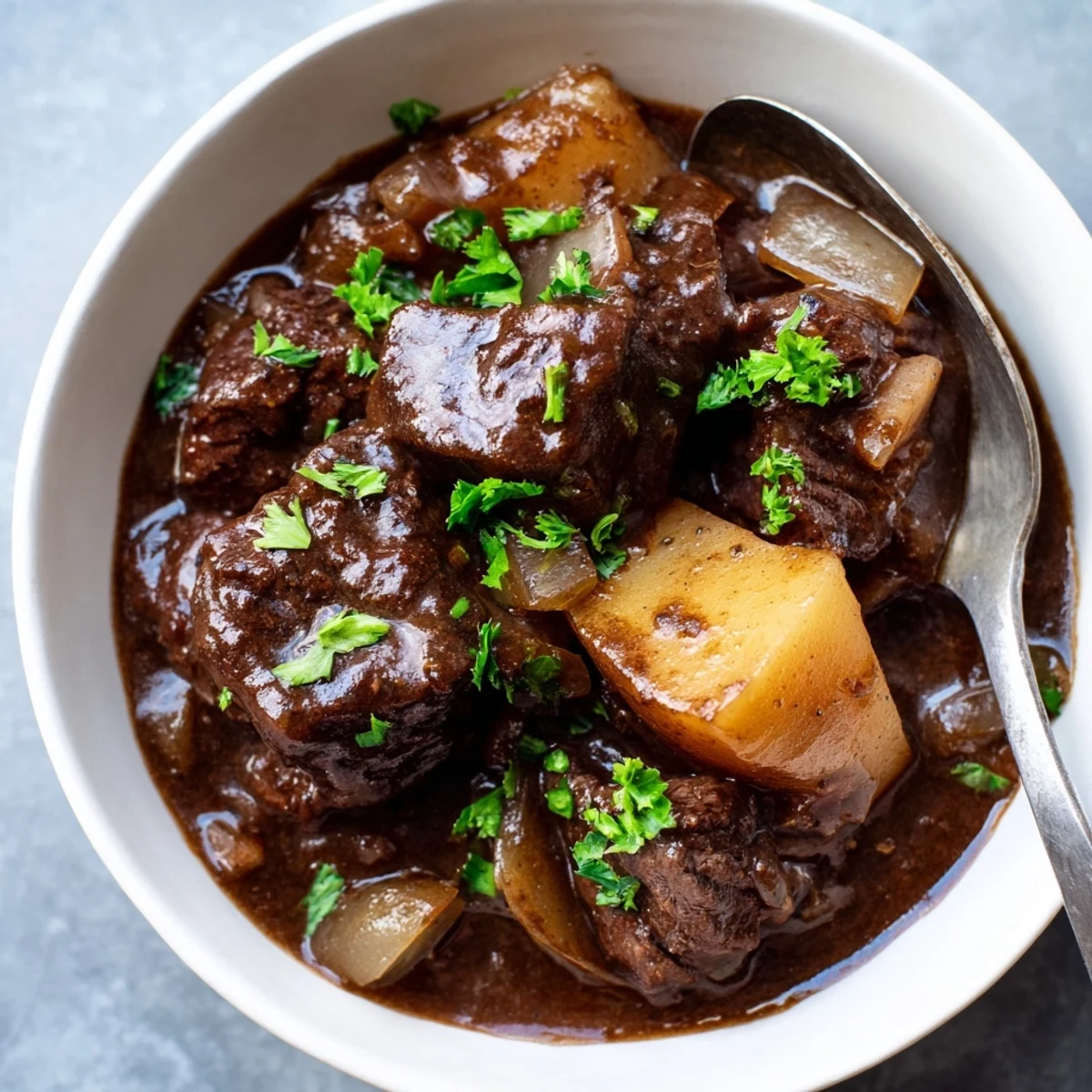
 This stew is the kind of meal that wraps around you while you eat it. Make it when you have time to let it simmer, and share it with people you don't mind lingering with at the table.
Recipe FAQs
- → What cut of beef is best for this stew?
-
Beef chuck or stewing beef, cut into 1-inch cubes, works best for tender, flavorful results after slow cooking.
- → How can I thicken the stew broth?
-
Mash a few cooked potato chunks into the broth before serving to achieve a thicker consistency naturally.
- → Can I substitute any vegetables in the stew?
-
Turnips can replace parsnips if preferred, maintaining the stew’s hearty and earthy flavor profile.
- → What makes this stew 'Guinness-style' without alcohol?
-
The use of non-alcoholic stout adds the rich, malty flavor characteristic of Guinness, maintaining depth without alcohol content.
- → What sides pair well with this stew?
-
Crusty bread and a fresh green salad complement the stew perfectly, balancing richness with crisp textures.
- → Is this stew suitable for dairy-free diets?
-
Yes, this dish contains no dairy ingredients, making it appropriate for dairy-free dietary needs.