
 Pin it
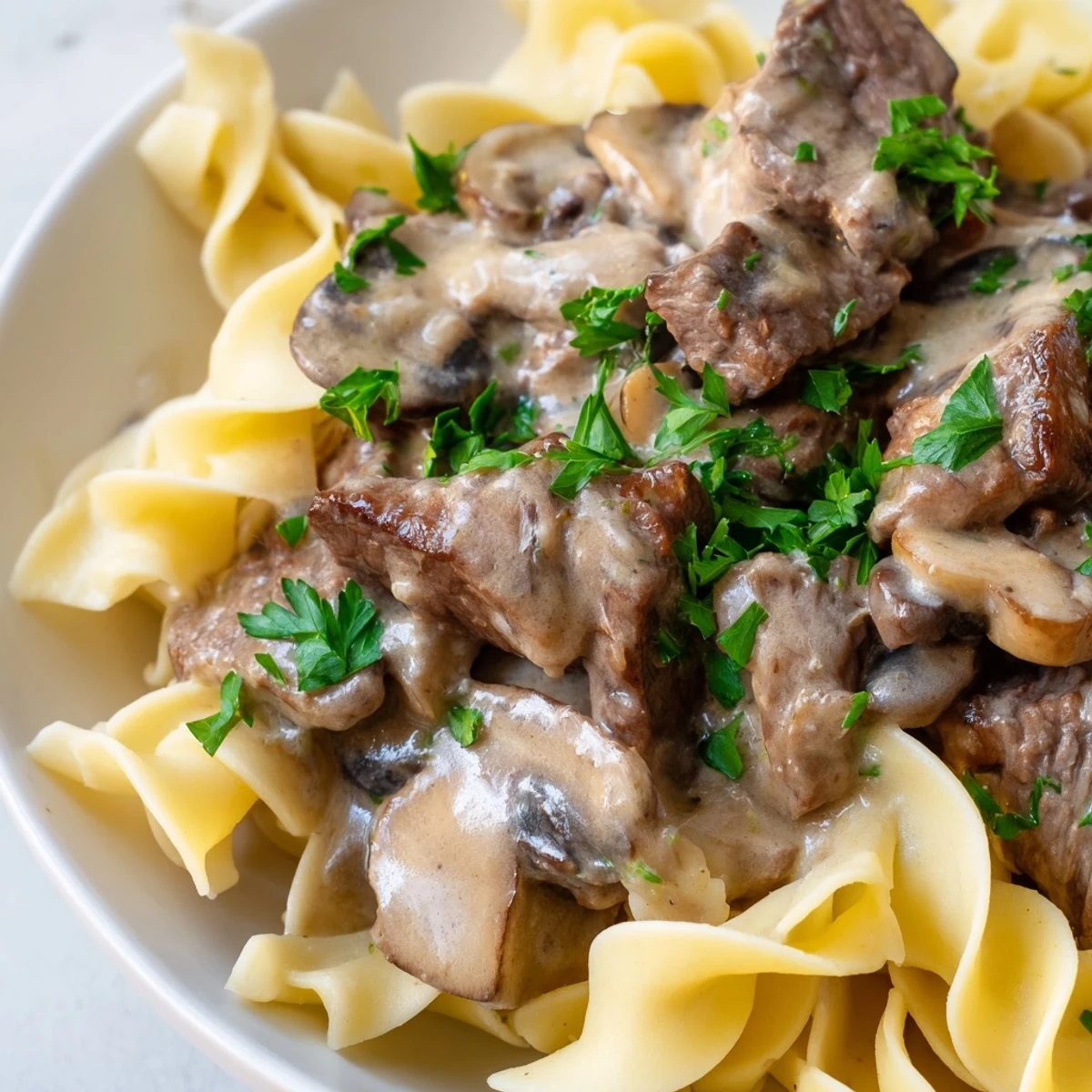
 Sear seasoned beef sirloin strips until browned, then set aside. In the same pan, sauté onions, garlic, and mushrooms in butter until softened and browned. Deglaze the pan with beef broth, Worcestershire, and Dijon mustard, allowing the sauce to reduce slightly. Finish by stirring in sour cream for richness and returning the beef to heat through. Serve this savory, creamy mixture over warm, buttered egg noodles for a classic hearty dish.
My grandmother kept a worn copy of a Russian cookbook on her kitchen shelf, and beef stroganoff was the dish that made me understand why she treasured it so carefully. The first time I attempted it, the kitchen filled with an aroma that seemed almost impossible—earthy mushrooms mingling with sour cream and beef that had been seared to golden perfection. I remember tasting that first spoonful over noodles and realizing how such a simple combination of ingredients could taste so deeply comforting. It's become the dish I turn to when I want to feel like someone who knows their way around a kitchen.
I made this for friends on a snowy evening, and there was something about watching them twirl noodles through the creamy sauce that felt like the whole point of cooking. One friend went back for seconds without asking, which is how I knew I'd gotten it right. That night taught me that stroganoff isn't just food—it's an invitation to slow down and actually taste what's in front of you.
Ingredients
- Beef sirloin or tenderloin (1 lb, cut into 1/2-inch strips): Tender cuts are essential here; they'll stay delicate during cooking rather than becoming chewy.
- All-purpose flour (2 tbsp): This light coating helps the beef brown beautifully and thickens the sauce slightly as it releases into the pan.
- Unsalted butter (3 tbsp total): Use real butter—it's what gives the sauce its rich, almost velvety quality.
- Yellow onion (1 medium, thinly sliced): Thin slices cook faster and distribute evenly through the sauce without overpowering it.
- Cremini or white mushrooms (10 oz, sliced): Cremini has more depth than white mushrooms, but either works; slice them about 1/4-inch thick so they cook through and release their umami.
- Garlic (3 cloves, minced): Fresh garlic adds brightness; don't skip the mincing step or you'll get chunks instead of flavor.
- Beef broth (1 cup): Good broth matters here—it's the foundation of the sauce, so choose one you'd actually drink.
- Worcestershire sauce (1 tbsp): A secret ingredient that adds depth without anyone realizing where the complexity comes from.
- Dijon mustard (1 tsp): Just a touch sharpens everything and prevents the sauce from tasting one-dimensional.
- Sour cream (1 cup, at room temperature): Room temperature is crucial—cold sour cream can cause the sauce to break or become grainy.
- Wide egg noodles (12 oz): Their flat surface catches the sauce beautifully, unlike thin noodles which let it slide right off.
- Fresh parsley (2 tbsp chopped, plus extra for garnish): Parsley added at the end stays bright and fresh; cooked parsley tastes like sadness.
- Olive oil (1 tbsp): Combined with butter for a higher smoke point so the beef browns instead of steams.
Instructions
- Start the noodles:
- Get a large pot of salted water boiling while you prepare everything else. Cook the egg noodles according to package directions until they're tender but still have a slight bite to them—this matters because they'll sit in warmth while you make the sauce.
- Prep and season the beef:
- Pat your beef strips dry with paper towels, then season generously with salt and pepper. Dust them lightly with flour, shaking off the excess so you get a thin, even coating that'll help them brown.
- Sear the beef:
- Heat butter and olive oil in a large skillet over medium-high heat until it shimmers. Working in batches so the pan stays hot, sear each piece of beef for about 1 to 2 minutes per side until it's golden brown on the outside but still pink in the middle—you're going to cook it more later, so don't overdo it now.
- Build the aromatics:
- Add the remaining butter to the same skillet. Sauté your sliced onions until they turn soft and translucent, about 3 to 4 minutes, then stir in the minced garlic and cook for just 30 seconds until it becomes fragrant—any longer and it'll taste bitter.
- Cook the mushrooms:
- Add your sliced mushrooms and cook them for 6 to 8 minutes, stirring now and then, until they release their liquid and start to brown slightly. This is where the depth of flavor develops, so don't rush it or skip the browning step.
- Make the sauce base:
- Pour in the beef broth, Worcestershire sauce, and Dijon mustard. Use your wooden spoon to scrape up all those golden, caramelized bits stuck to the bottom of the pan—they're pure flavor. Simmer for 3 to 4 minutes to let the liquid reduce slightly and the flavors come together.
- Finish with sour cream:
- Lower the heat to medium and stir in your room-temperature sour cream slowly until it's completely smooth. This is the moment where patience matters most—if the heat is too high, the cream will break and you'll have a grainy sauce instead of something silky. Return the beef and any juices to the skillet and let everything warm gently for 2 to 3 minutes.
- Finish and serve:
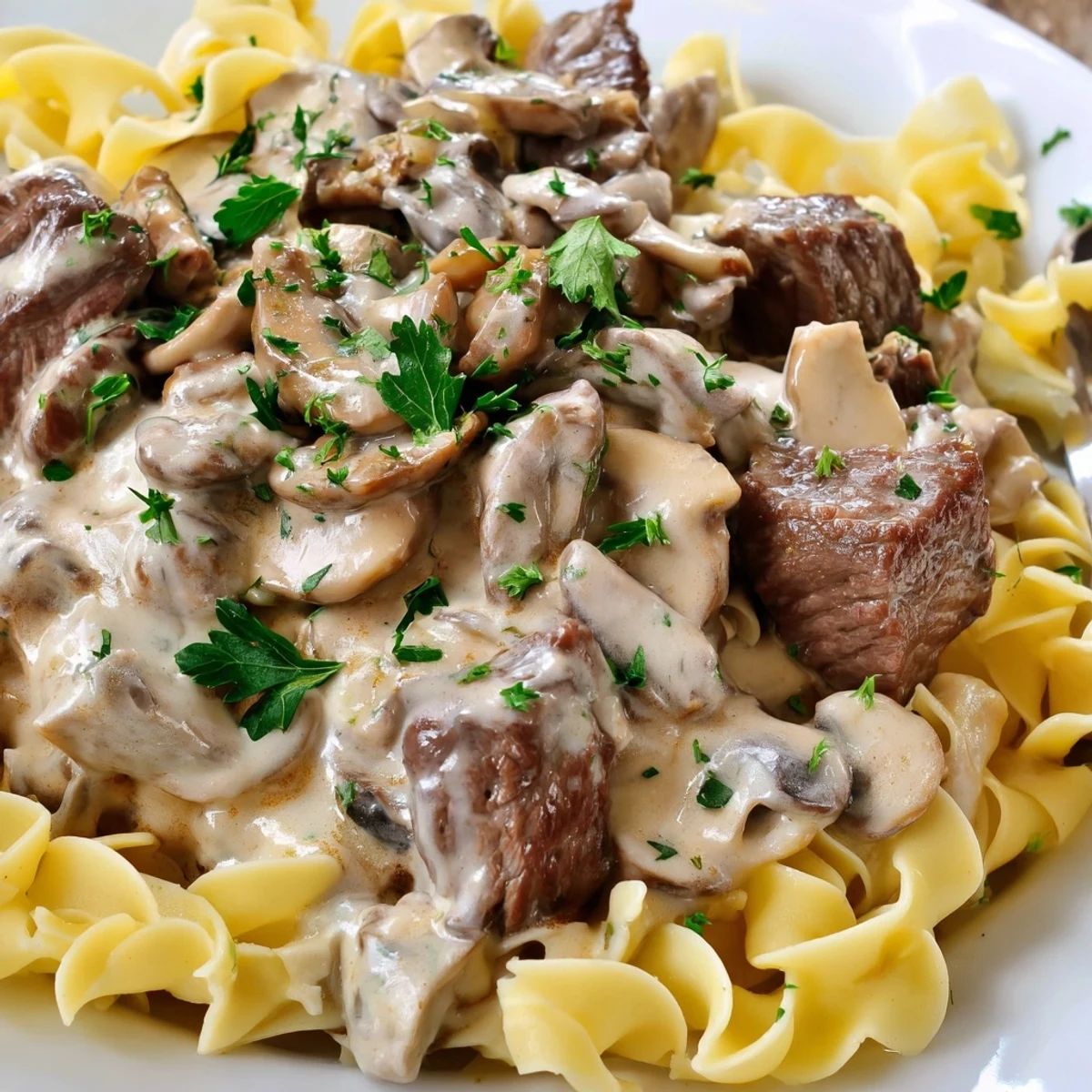
- Taste and adjust the seasoning with salt and pepper if needed. Drain your noodles, toss them with that tablespoon of butter, and divide them among bowls. Spoon the beef and mushroom sauce generously over top and finish with a scatter of fresh parsley.
 Pin it
 This dish taught me that beef stroganoff isn't complicated—it's just beef, mushrooms, and cream treated with respect. The magic happens when you stop rushing and let each component do its job, from the slow browning of mushrooms to the gentle warming of sour cream at the end.
The Art of Searing
Getting the beef properly seared is the first secret to this dish tasting restaurant-quality. When I first made stroganoff, I crowded the pan with too much beef at once, and it steamed instead of browned—the sauce ended up pale and one-dimensional. Now I work in batches and let the pan get screaming hot before each addition. The beef develops a golden crust that tastes like caramelized richness, and that's what makes the whole dish sing. Your pan should be hot enough that the meat hits it with an audible sizzle.
Why This Works Over Noodles
Wide egg noodles are the only choice here because they have the surface area to cling to the creamy sauce in a way that thin noodles or long spaghetti never could. When I switched from regular spaghetti to wide noodles, the dish became something different entirely—less slippery, more luxurious, with every bite having a generous coating of sauce. The yolks in egg noodles also contribute a subtle richness that feels intentional rather than heavy.
Variations Worth Trying
While the classic version is perfect as-is, I've learned to play with it in ways that keep it interesting. A splash of white wine added after sautéing the mushrooms adds brightness and complexity that feels almost Parisian. Some nights when I want to lighten it without losing the comfort factor, I substitute Greek yogurt for half the sour cream, which keeps the creaminess but makes it feel less heavy. For a deeper mushroom flavor, I sometimes use a mix of cremini and one small handful of dried porcini mushrooms that I've rehydrated in warm broth—the soaking liquid becomes part of the sauce.
- A splash of white wine deepens the mushroom flavor and adds acidity that balances the richness.
- Greek yogurt can replace half the sour cream for a lighter version that still tastes decadent.
- Paprika adds color and a subtle smokiness if you want to layer the flavors.
 Pin it
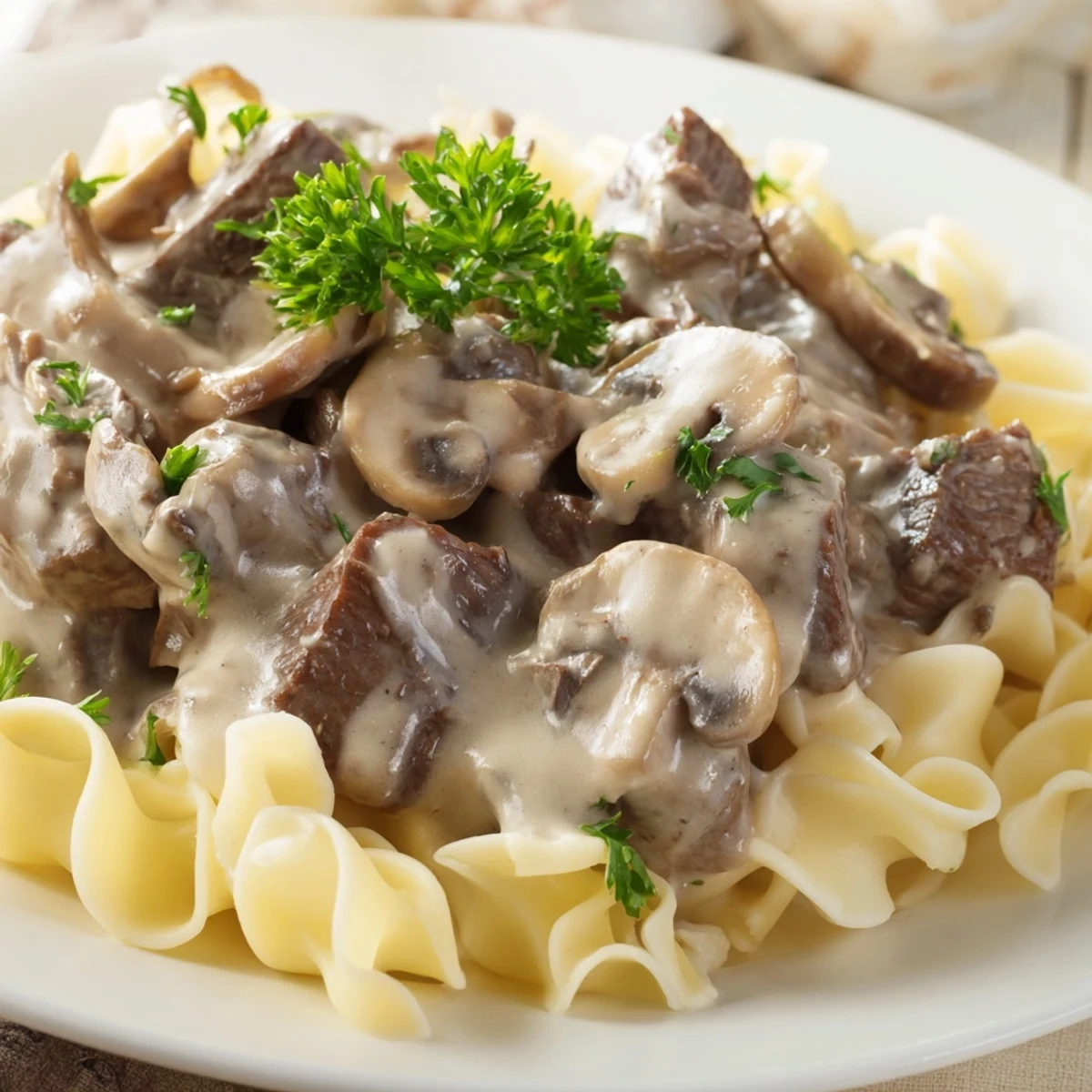
 Beef stroganoff is one of those dishes that rewards you for paying attention and treating each ingredient like it matters. Make it once and you'll understand why it's remained a comfort food across generations and continents.
Recipe FAQs
- → What cut of beef works best?
-
Sirloin or tenderloin are ideal cuts because they remain tender during quick cooking and absorb flavors well.
- → Can I substitute the sour cream?
-
Yes, Greek yogurt is a lighter alternative, though it adds a slightly tangier finish to the sauce.
- → How do I prevent the sauce from curdling?
-
Ensure the sour cream is at room temperature and stir it in off the heat or over very low heat to avoid separation.
- → Can I make this gluten-free?
-
Substitute all-purpose flour with cornstarch for coating the beef and serve over gluten-free pasta or rice.
- → What wine pairs with this dish?
-
A light-bodied red wine like Pinot Noir or a glass of chilled lager complements the rich, creamy sauce perfectly.