
 Pin it
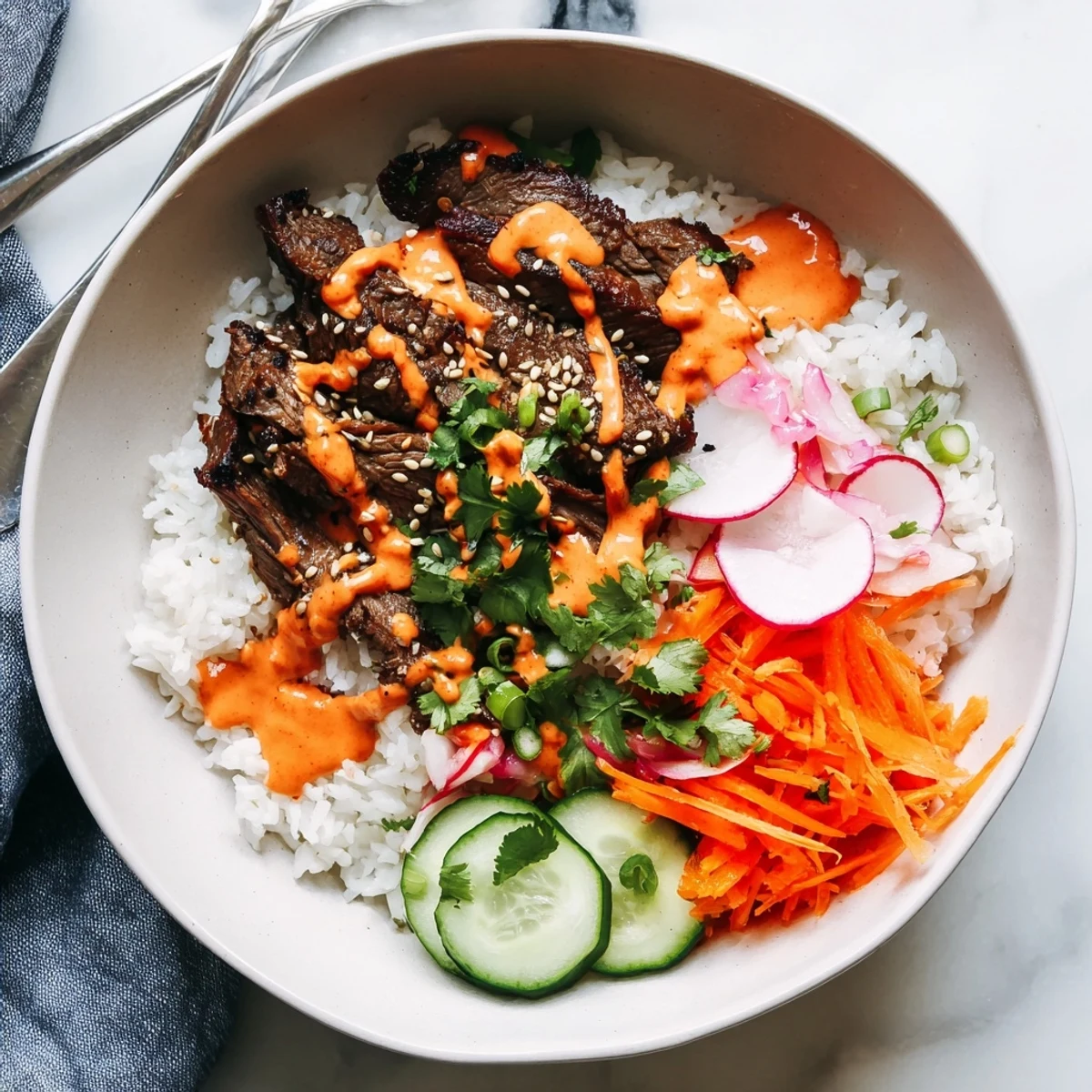
 These Korean BBQ steak rice bowls combine tender marinated flank steak with fluffy white rice and fresh, crisp vegetables for a complete meal that comes together in just 35 minutes. The steak gets its rich, savory flavor from a quick marinade featuring soy sauce, sesame oil, garlic, ginger, and gochujang Korean chili paste.
What really makes these bowls shine is the spicy cream sauce—a creamy blend of mayonnaise, sriracha, lime juice, and honey that perfectly balances heat with sweetness. Top everything with shredded carrots, cucumber, radishes, spring onions, and toasted sesame seeds for texture and freshness.
The preparation is straightforward: marinate the steak for 15 minutes while you cook the rice and whisk together the sauce. Then sear the steak in a hot skillet until caramelized and assemble your bowls. The result is a restaurant-quality Korean-inspired meal that's perfect for busy weeknights but impressive enough for serving guests.
My tiny apartment kitchen smelled like caramelized heaven the first time I attempted Korean BBQ at home. I had no grill, just a screeching hot cast iron skillet and beef that had been soaking in gochujang and sesame oil for an hour. The smoke alarm may have gone off once, but one bite of that charred, sweet-spicy steak made me forget the noise entirely.
Last summer my friend Sarah came over for what was supposed to be a quick dinner between work shifts. She ended up staying three hours, eating two bowls, and demanding the recipe before she even put on her shoes again. Now she texts me every time she makes it, which honestly makes my week better every single time.
Ingredients
- Flank steak (450 g): Thinly slice against the grain for maximum tenderness or ask your butcher to do it for you
- Soy sauce (2 tablespoons): The salty base that helps the beef absorb all those Korean BBQ flavors
- Brown sugar (1 tablespoon): Caramelizes beautifully when the steak hits high heat creating that gorgeous char
- Sesame oil (1 tablespoon): Toasted sesame oil adds that signature nutty aroma you cannot substitute
- Rice vinegar (2 teaspoons): Cuts through the richness and helps tenderize the meat as it marinades
- Garlic (2 cloves): Fresh minced garlic beats pre-minced every single time for this recipe
- Fresh ginger (1 teaspoon): Grate it on a microplane for the best texture and flavor distribution
- Gochujang (1 teaspoon): Korean chili paste brings a complex fermented heat that hot sauce cannot match
- Sesame seeds (1 teaspoon): Toast them in a dry pan for 2 minutes before adding to the marinade
- Cooked jasmine rice (2 cups): Day old rice works beautifully but freshly cooked is perfectly fine too
- Mayonnaise (4 tablespoons): Real mayonnaise creates the velvety base for the spicy cream sauce
- Sriracha (2 tablespoons): Adjust based on your heat tolerance but do not skip it entirely
- Lime juice (2 teaspoons): Freshly squeezed adds brightness that cuts through the rich sauce
- Honey (1 teaspoon): Balances the heat and adds a subtle sweetness to the cream sauce
- Shredded carrots (1 cup): Buy pre-shredded to save time or use a vegetable peeler for ribbons
- Cucumber (1 whole): English cucumbers work best because they have fewer seeds and stay crunchier
- Radishes (4 whole): Thinly slice them for a peppery crunch that cuts through the rich beef
- Spring onions (2 stalks): Both the white and green parts add different layers of flavor
Instructions
- Marinate the beef:
- Whisk together soy sauce, brown sugar, sesame oil, rice vinegar, garlic, ginger, gochujang, and sesame seeds. Add sliced steak and toss to coat, then let it sit for at least 15 minutes while you prep everything else.
- Get your rice ready:
- Cook the jasmine rice according to package directions or use freshly made rice. Keep it warm and fluff with a fork before serving.
- Make the magic sauce:
- Stir together mayonnaise, sriracha, gochujang, lime juice, and honey until completely smooth. Taste and adjust the heat level to your liking, then set aside until serving.
- Sear the steak like a pro:
- Heat a large skillet over high heat until it is practically smoking. Cook the marinated beef in batches for 2 to 3 minutes per side, letting it develop a dark caramelized crust.
- Build your bowls:
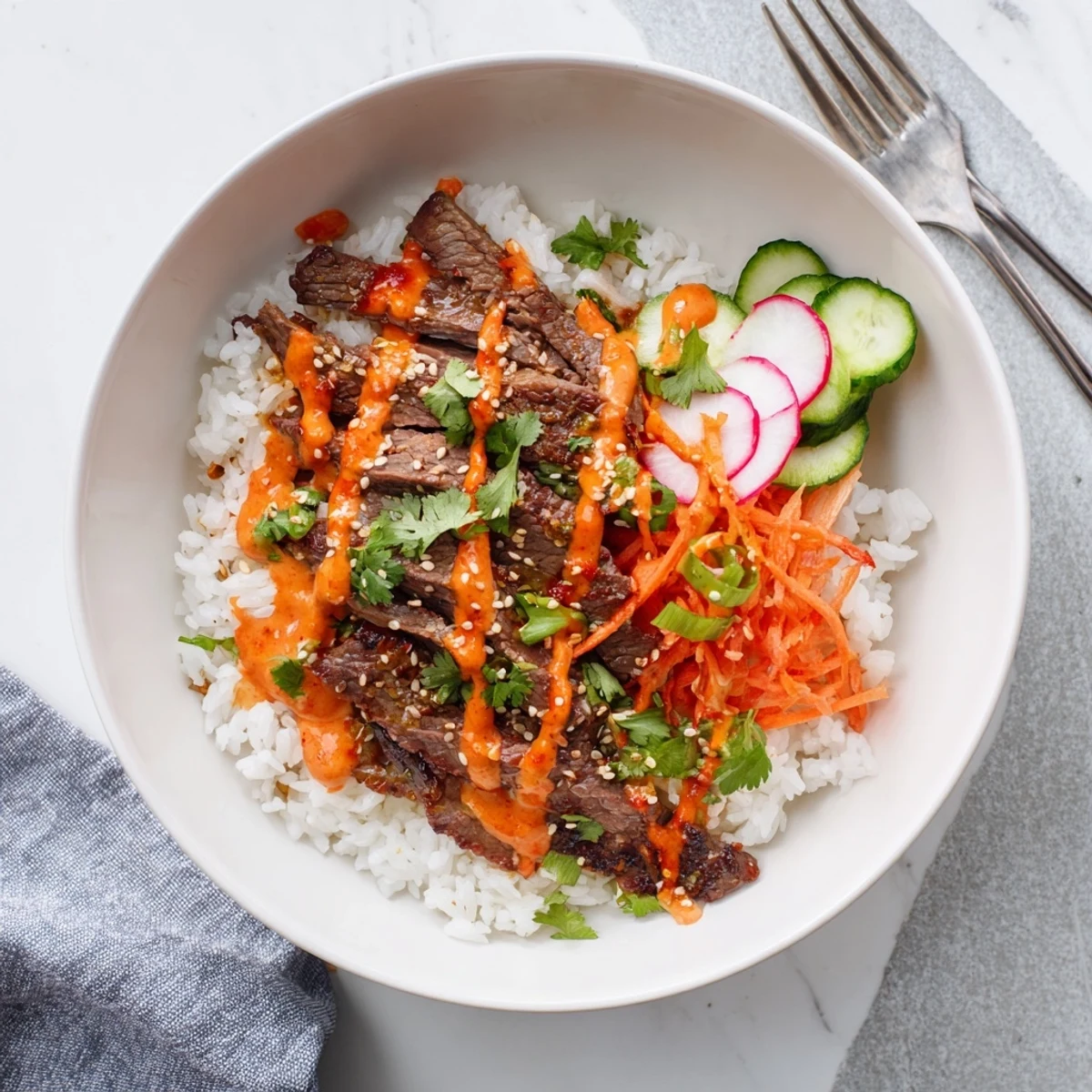
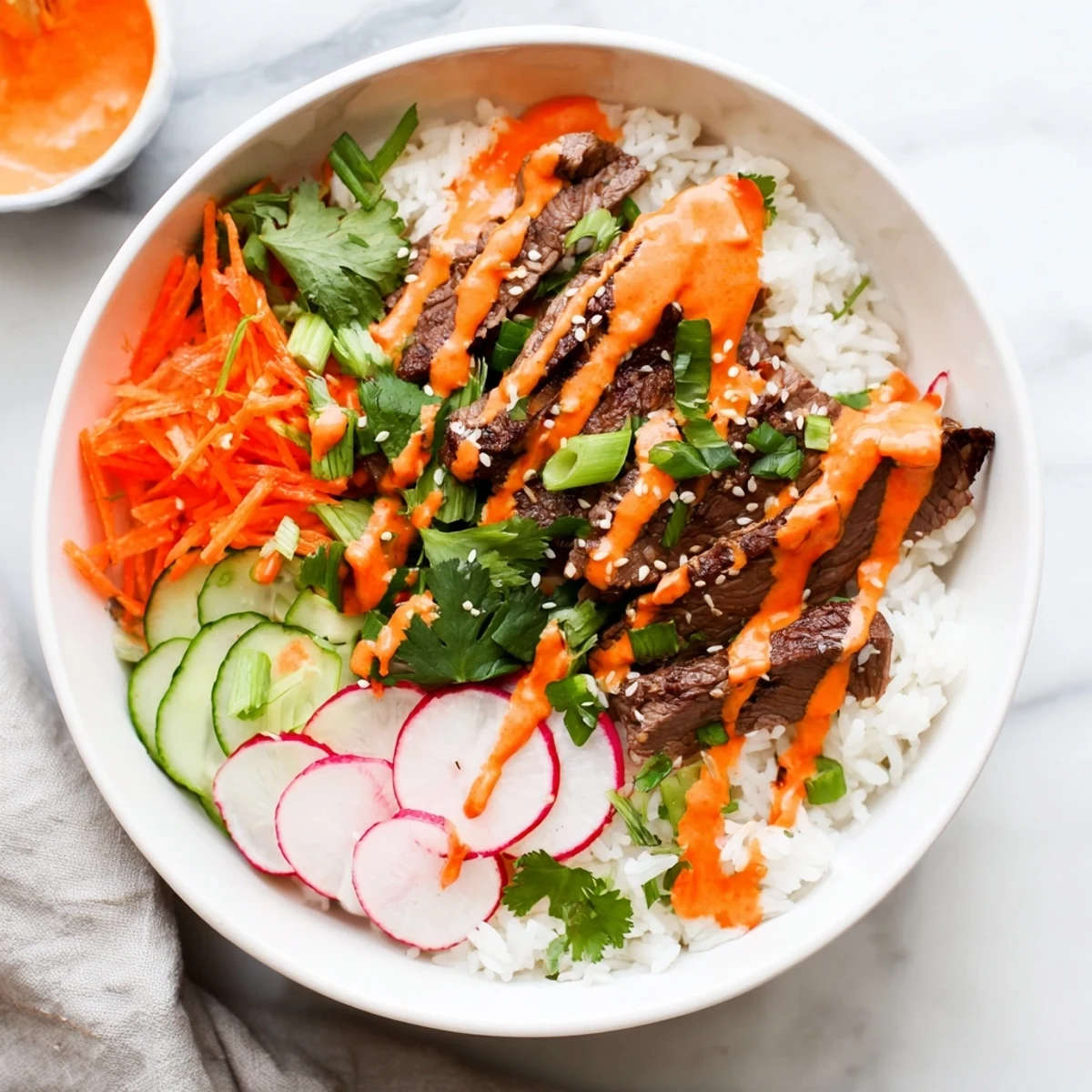
- Divide warm rice between four bowls and arrange the steak on top. Arrange carrots, cucumber, radishes, and spring onions in sections over the beef and rice.
- Finish with flair:
- Drizzle that spicy cream sauce generously over everything. Sprinkle with toasted sesame seeds and fresh herbs if you are feeling fancy, then serve immediately while the steak is still hot and sizzling.
 Pin it
 This recipe saved me during a particularly exhausting week when cooking felt like a mountain I could not climb. Now whenever I see gochujang in my fridge, I remember how something so simple brought so much comfort to my table on those hard days.
Making It Your Own
I have made these bowls with sliced chicken breast, pressed tofu, and even portobello mushrooms when beef was not in the budget. Each variation brings something different to the table, but that spicy cream sauce ties everything together beautifully no matter what protein you choose.
Perfect Pairings
A light crisp lager cuts through the rich flavors perfectly, but a dry riesling works beautifully if you prefer wine. I also love serving simple steamed edamame or a quick seaweed salad on the side for that complete bistro experience at home.
Meal Prep Magic
These bowls meal prep like a dream and actually taste better after the flavors have time to meld together in the refrigerator. Store the rice, beef, vegetables, and sauce in separate containers and assemble when ready to eat.
- Cook the rice in bulk and portion it out for the week ahead
- Double the spicy cream sauce because you will want to put it on everything
- Slice all your vegetables in one batch to save time during the week
 Pin it
 I hope these Korean BBQ steak bowls bring as much joy to your table as they have to mine over the years.
Recipe FAQs
- → Can I use a different cut of beef?
-
Yes! While flank steak works beautifully, you can substitute skirt steak, sirloin, or ribeye. Just slice any cut thinly against the grain for tenderness.
- → How can I make this dish vegetarian?
-
Replace the steak with firm tofu, portobello mushrooms, or tempeh. Marinate and cook them the same way as the beef for equally delicious results.
- → Can I prepare components ahead?
-
Absolutely! You can marinate the steak up to 24 hours in advance, cook the rice ahead of time, and prepare the vegetables and sauce a day before. Reheat the steak gently before assembling.
- → Is the spicy cream sauce very hot?
-
The sauce has moderate heat that most people enjoy. Adjust the spiciness by using less sriracha or gochujang for a milder version, or add more if you love it fiery.
- → What other toppings work well?
-
Kimchi, pickled vegetables, avocado slices, steamed edamame, or soft-boiled eggs make excellent additions. Fresh herbs like basil or Thai basil also work beautifully.
- → Can I use brown rice instead?
-
Certainly! Brown rice adds nutty flavor and extra fiber. Just note that brown rice typically takes longer to cook—about 45 minutes compared to 15-20 minutes for white rice.