
 Pin it
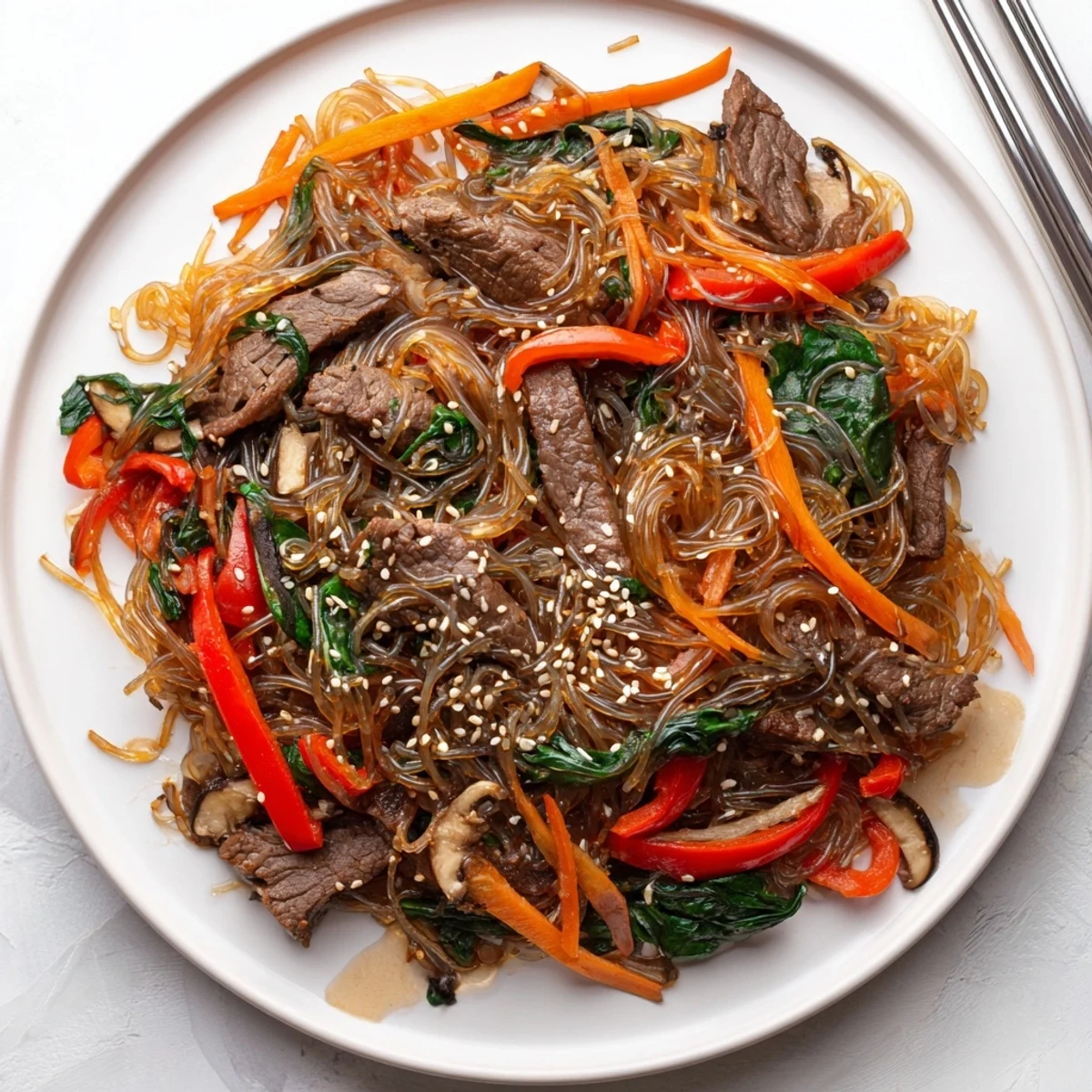
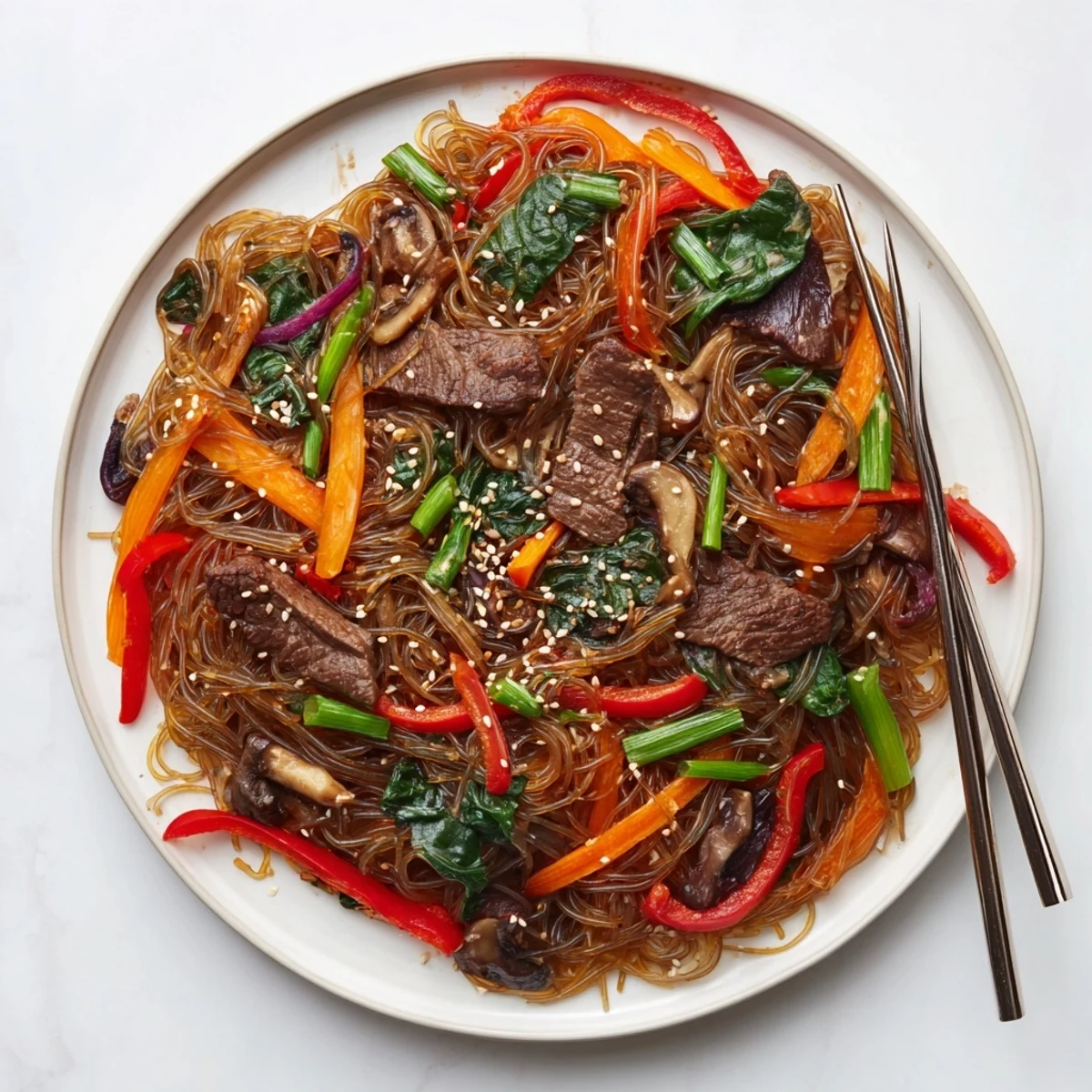
 This Korean-inspired bowl combines thinly sliced flank steak with chewy sweet potato glass noodles, crisp vegetables, and a rich sauce. The beef marinates briefly in soy and cornstarch for tenderness, then gets stir-fried with carrots, bell peppers, and shiitake mushrooms. The sauce balances sweet brown sugar, salty soy sauce, and spicy gochujang paste with aromatic garlic and ginger. Everything comes together in one skillet in under an hour, making it perfect for busy evenings. Serve with sesame seeds and fresh scallions for a complete meal that's both satisfying and packed with flavor.
The first time I made Korean beef noodles, I accidentally bought regular glass noodles instead of the sweet potato variety, and while they worked, the chewy springy texture just was not there. Now I always keep a package of dangmyeon in my pantry because that distinctive bounce is what makes this dish feel like takeout from your favorite Korean spot.
Last winter my neighbor came over while I was making this and immediately asked what smelled so incredible. We ended up eating standing up in the kitchen, too impatient to even set the table properly.
Ingredients
- Flank steak or sirloin: Thinly slicing against the grain is the secret to tender beef that does not get chewy during stir frying
- Sweet potato glass noodles (dangmyeon): These chewy springy noodles are nonnegotiable for authentic texture and hold onto the sauce beautifully
- Gochujang: This Korean chili paste adds depth and mild heat without overwhelming the dish
- Baby spinach: It wilts quickly in the hot noodles and adds fresh color without much effort
Instructions
- Prepare the beef:
- Toss the thinly sliced beef with soy sauce, cornstarch, and sesame oil until coated. Let it sit while you prep everything else.
- Cook the noodles:
- Boil the noodles according to package directions, drain, and rinse under cold water to stop the cooking and prevent sticking.
- Whisk the sauce:
- Combine all the sauce ingredients in a small bowl, stirring until the brown sugar dissolves completely.
- Sear the beef:
- Heat half the oil in a large skillet over medium-high heat. Add the beef and stir fry for 2-3 minutes until browned, then remove from the pan.
- Cook the vegetables:
- Add the remaining oil to the skillet. Stir fry the carrots, bell pepper, and mushrooms until just tender.
- Bring it all together:
- Return the beef to the pan with the noodles, spinach, and sauce. Toss for 2-3 minutes until everything is coated and heated through.
 Pin it
 This recipe became my go-to for busy weeknights when I want something that feels special but does not require hours of prep.
Getting the Noodle Texture Right
Do not skip the cold water rinse after boiling the noodles. This step stops the cooking process and washes away excess starch, which prevents them from becoming a sticky mess when you toss them with the sauce.
Customizing the Heat Level
Gochujang brings a gentle warmth rather than intense spiciness. Start with one tablespoon and taste before adding more. You can always incorporate red pepper flakes if you want to turn up the heat without changing the flavor profile.
Make Ahead Strategy
Prep all your ingredients beforehand and keep them in separate containers. The sauce can be mixed up to two days in advance and stored in the refrigerator.
- Cook the beef and vegetables just before serving for the best texture
- Leftovers reheat beautifully in the microwave with a splash of water
- The flavors actually develop more depth overnight
 Pin it
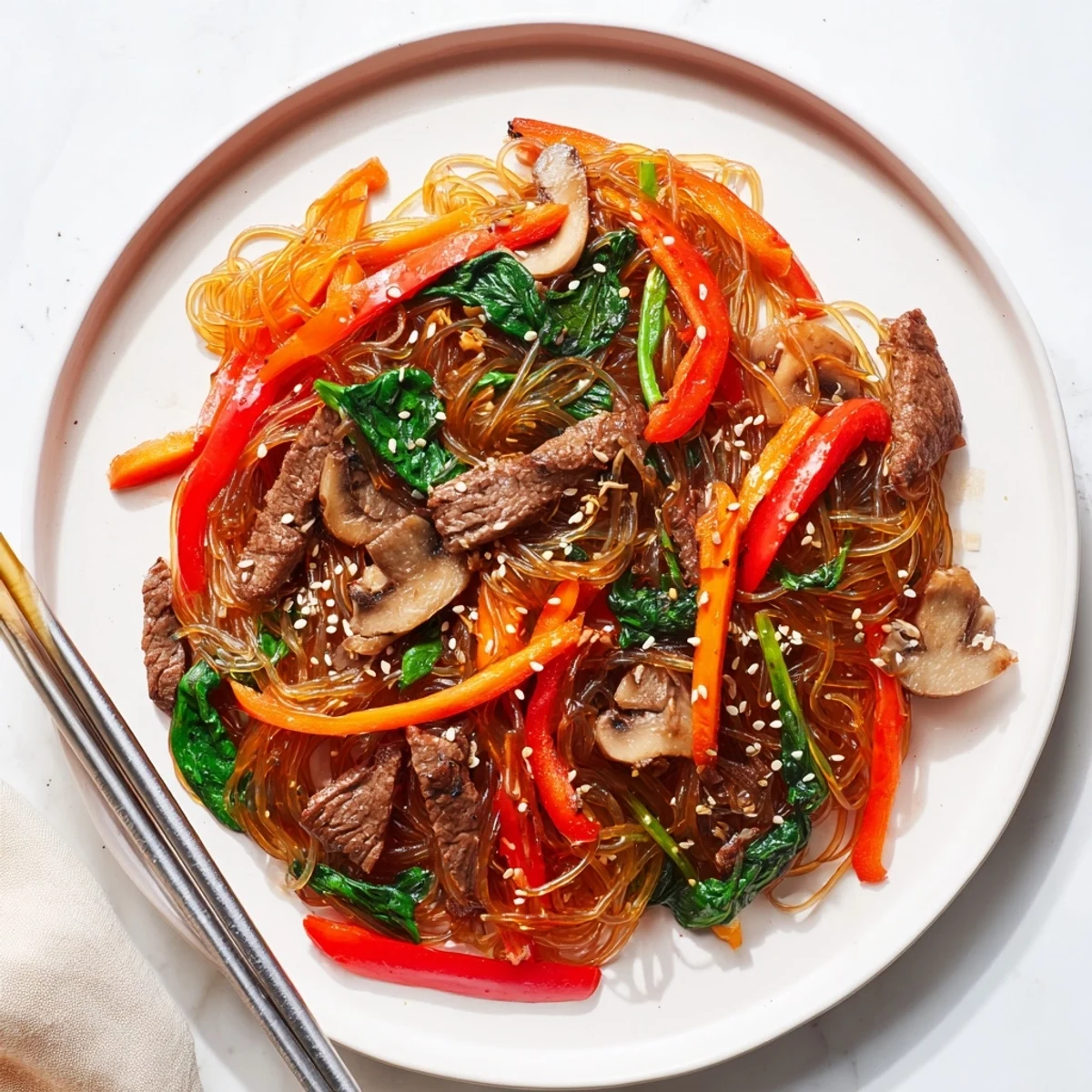
 Slurping is absolutely encouraged when eating these noodles. Enjoy every chewy savory bite.
Recipe FAQs
- → What type of noodles work best?
-
Korean sweet potato glass noodles (dangmyeon) are traditional, but rice noodles work well too. They have a satisfying chewy texture that holds up in the sauce.
- → Can I make this less spicy?
-
Absolutely. Reduce the gochujang to 1 teaspoon or omit it entirely. The dish will still have plenty of flavor from soy sauce, garlic, and ginger.
- → What cut of beef should I use?
-
Flank steak or sirloin work best. Slice the beef thinly against the grain for tenderness. Freezing the meat for 20 minutes makes it easier to slice.
- → Can I prepare this ahead?
-
You can slice the vegetables and mix the sauce up to a day in advance. Cook everything just before serving for the best texture and flavor.
- → Is this dish gluten-free?
-
It can be. Use tamari instead of soy sauce and verify your noodles and gochujang are gluten-free. Many glass noodles are naturally gluten-free.
- → What other proteins can I use?
-
Thinly sliced chicken breast works well, as does firm tofu for a vegetarian option. Adjust cooking times accordingly—chicken needs about 5 minutes to cook through.