
 Pin it
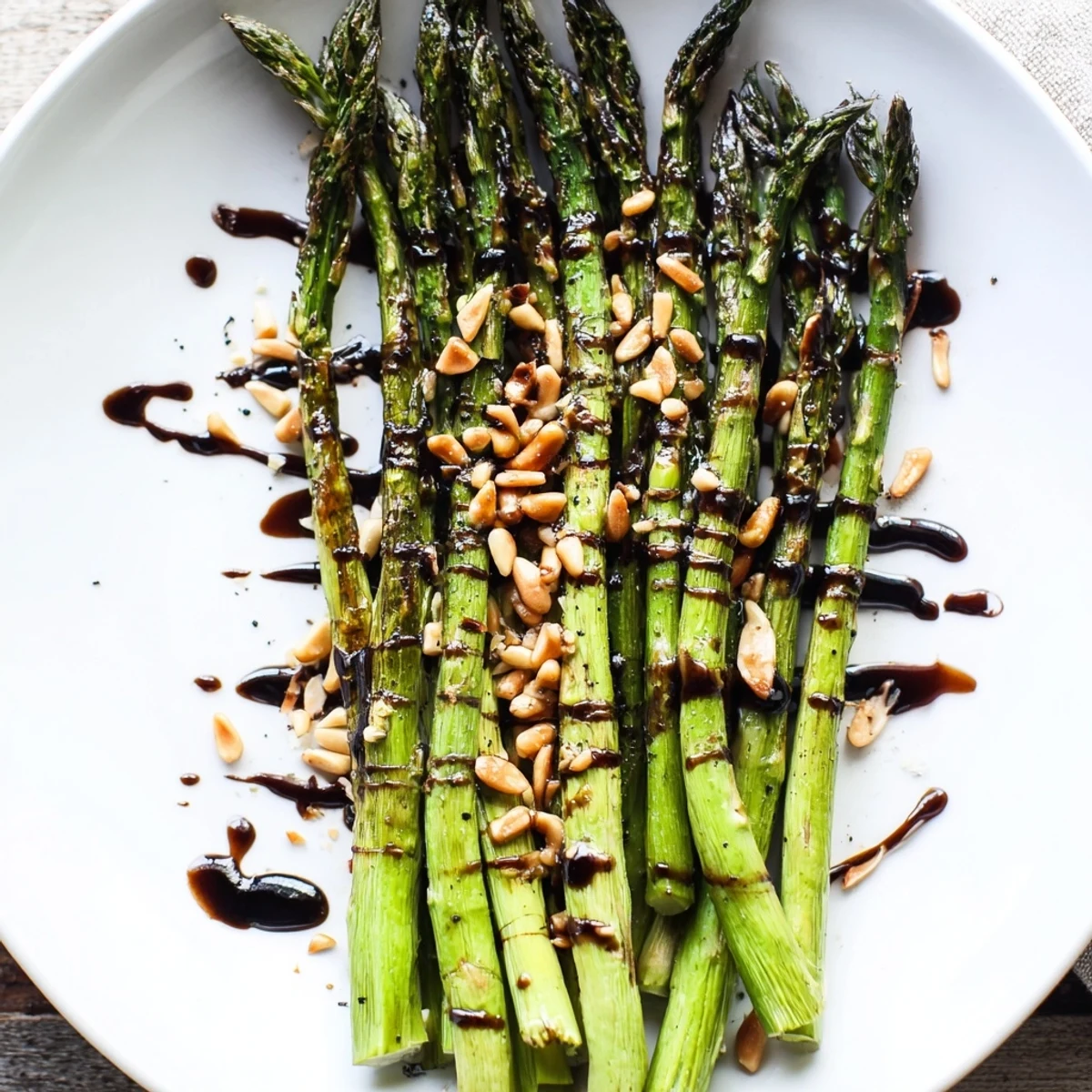
 Experience tender asparagus spears roasted until slightly caramelized and coated with olive oil and seasoning. A homemade balsamic vinegar reduction adds a glossy, sweet-tart finish that complements the natural flavors. Optional garnishes like toasted pine nuts and shaved Parmesan bring texture and depth. This easy side highlights fresh, simple ingredients and elegant preparation.
Last spring, I somehow ended up with three pounds of asparagus from my CSA box and absolutely no plan. The balsamic reduction trick came from a tiny Italian restaurant where I watched the chef drizzle something dark and gorgeous over vegetables, turning simple sides into the kind of thing you actually crave.
I made this for a dinner party once when I was running behind on everything else. The platter came back empty, and two friends actually argued over who got the last stalk coated in that sticky sweet vinegar glaze. Now its my go to when I need to look fancy without really trying.
Ingredients
- Fresh asparagus: Look for bright green spears with tight tips and snap off the woody ends rather than cutting them
- Olive oil: Helps the asparagus roast evenly and develop those lovely caramelized edges
- Kosher salt: Use less if youre planning to add Parmesan at the end
- Balsamic vinegar: The real star here, it reduces down into a thick syrupy glaze
- Maple syrup or honey: Just enough to balance the acidity and help the reduction cling to the spears
Instructions
- Get the oven going:
- Crank it to 425°F and line your baking sheet with parchment paper for easy cleanup later
- Prep the asparagus:
- Arrange trimmed spears in a single layer, drizzle with olive oil, then sprinkle with salt and pepper and toss until every stalk glistens
- Roast until tender:
- Slide the pan into the oven for 12 to 15 minutes, giving it a shake halfway through so nothing burns
- Make the magic glaze:
- While the asparagus roasts, simmer balsamic vinegar and maple syrup in a small saucepan for 6 to 8 minutes until it reduces by half and coats the back of a spoon
- Bring it all together:
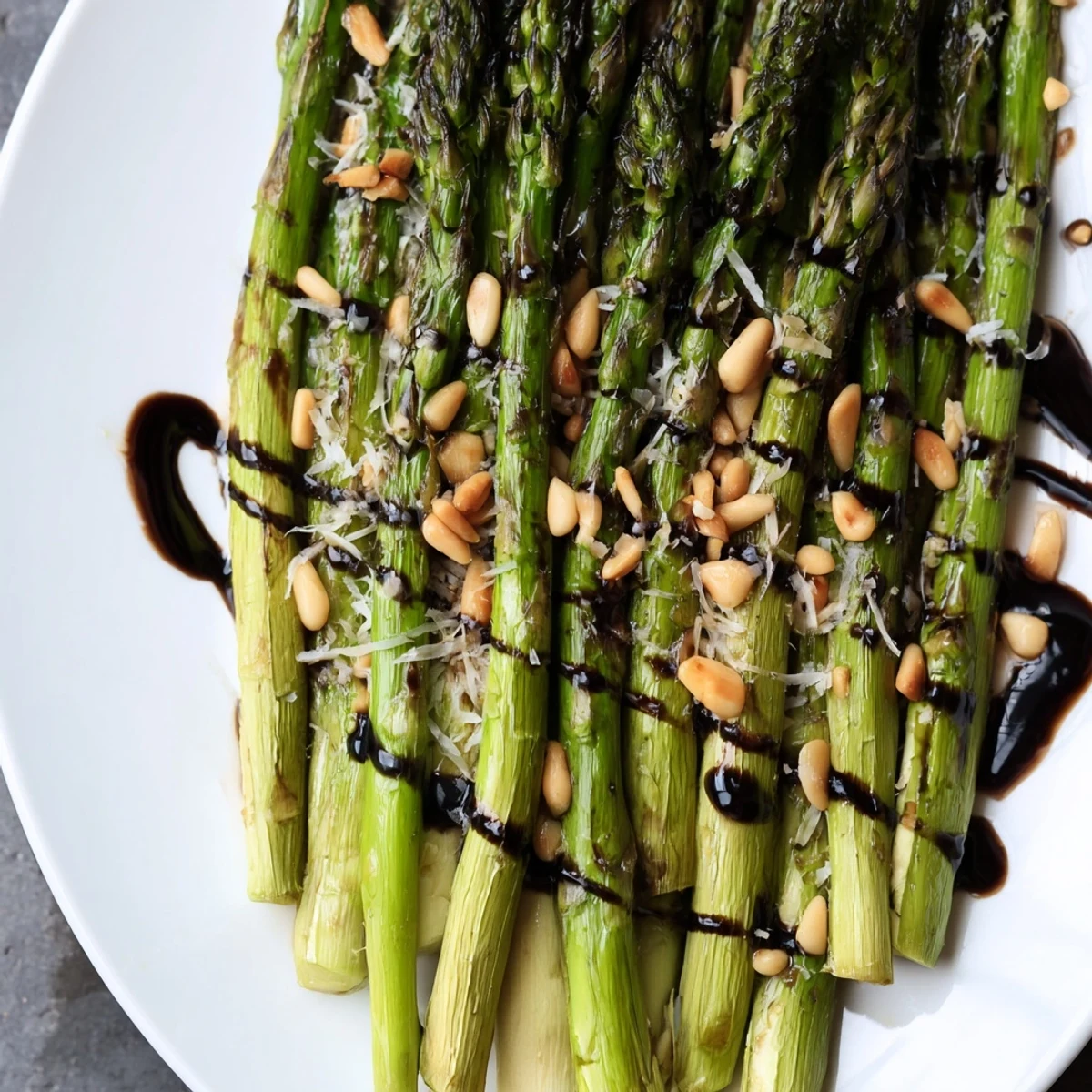
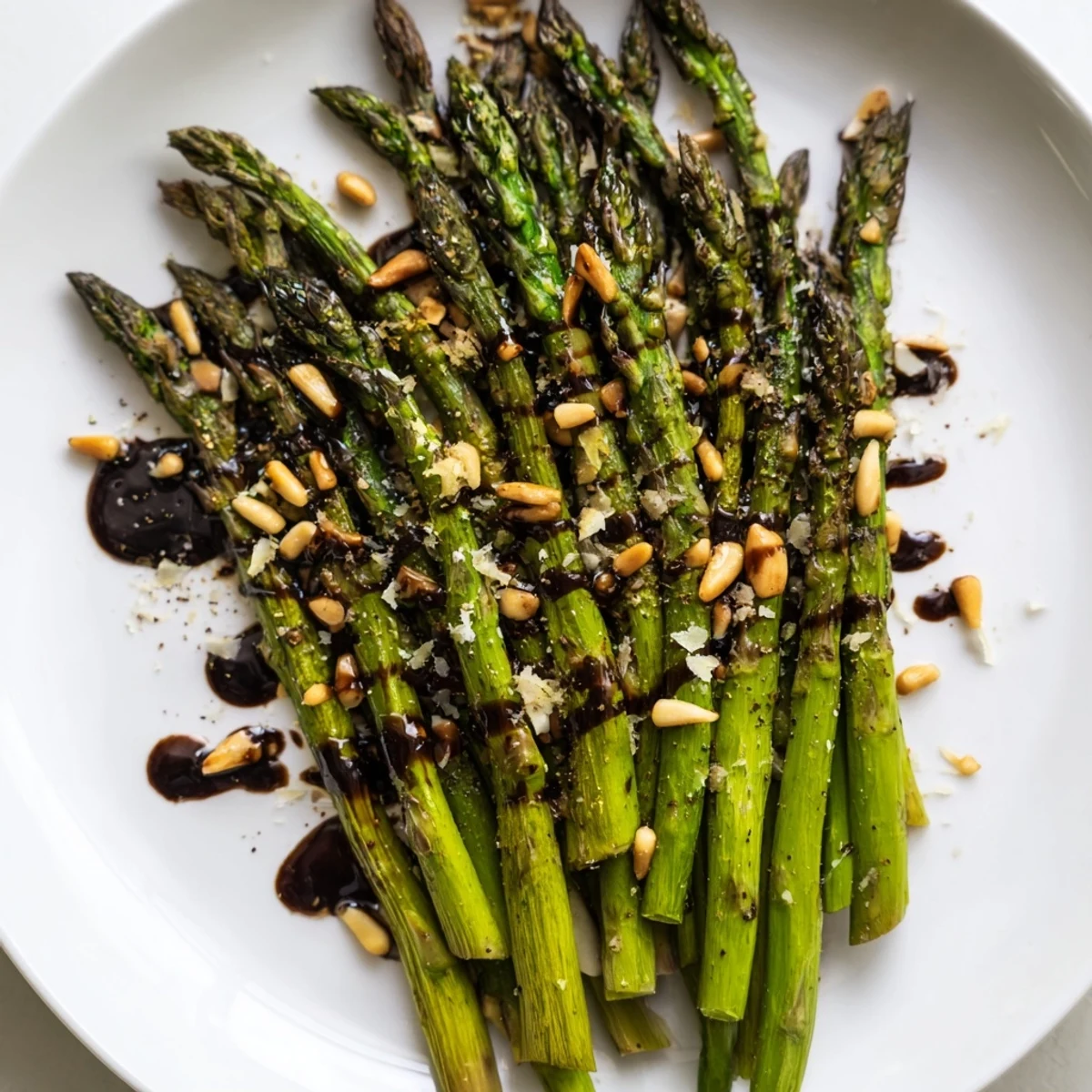
- Pile the roasted asparagus onto a platter, drizzle that gorgeous reduction all over, and finish with pine nuts or Parmesan if you are feeling fancy
 Pin it
 My mom called me mid recipe once asking why her balsamic wasnt thickening, and we realized she was still using high heat. Once she turned it down to a gentle bubble, she texted me a photo of the most perfect glossy reduction she had ever made. Now she teaches her friends the same trick.
Getting That Perfect Roast
I have learned that thin and thick spears cook at different rates. If your asparagus is all different sizes, sort them by thickness and pull the skinny ones out a few minutes early. Nothing worse than perfect thick stalks and shriveled skinny ones.
Make It Your Way
Sometimes I add lemon zest right at the end for brightness, especially in spring when everything feels fresh. Other times I skip the garnish entirely and just let the balsamic shine. Both ways disappear just as fast from the table.
Serving Ideas
This sits beautifully next to grilled salmon or a simple roasted chicken. It also holds its own on a vegetarian spread alongside some good crusty bread and maybe a soft cheese.
- Warm leftovers reheat surprisingly well in a 350°F oven for about 5 minutes
- The balsamic reduction keeps in the fridge for weeks and is incredible on strawberries too
- Double the glaze recipe and thank yourself later
 Pin it
 There is something deeply satisfying about taking such humble ingredients and turning them into something that feels like a treat. That little bit of effort on the reduction pays off in ways that make people think you are secretly a professional chef.
Recipe FAQs
- → How do I know when asparagus is perfectly roasted?
-
Asparagus is ready when it turns tender yet retains slight firmness, with edges showing light caramelization after about 12–15 minutes roasting.
- → Can I prepare the balsamic reduction ahead of time?
-
Yes, prepare the balsamic reduction in advance and store it in the refrigerator. Rewarm gently before drizzling over asparagus.
- → What alternatives can I use for pine nuts?
-
Hazelnuts or slivered almonds can substitute toasted pine nuts to maintain crunch and nutty flavor.
- → How should I adjust for a vegan option?
-
Simply omit the Parmesan garnish or replace it with a plant-based cheese alternative for a vegan-friendly dish.
- → What temperatures are ideal for roasting asparagus?
-
Roasting at 425°F (220°C) allows asparagus to cook evenly while developing a slightly caramelized exterior.