
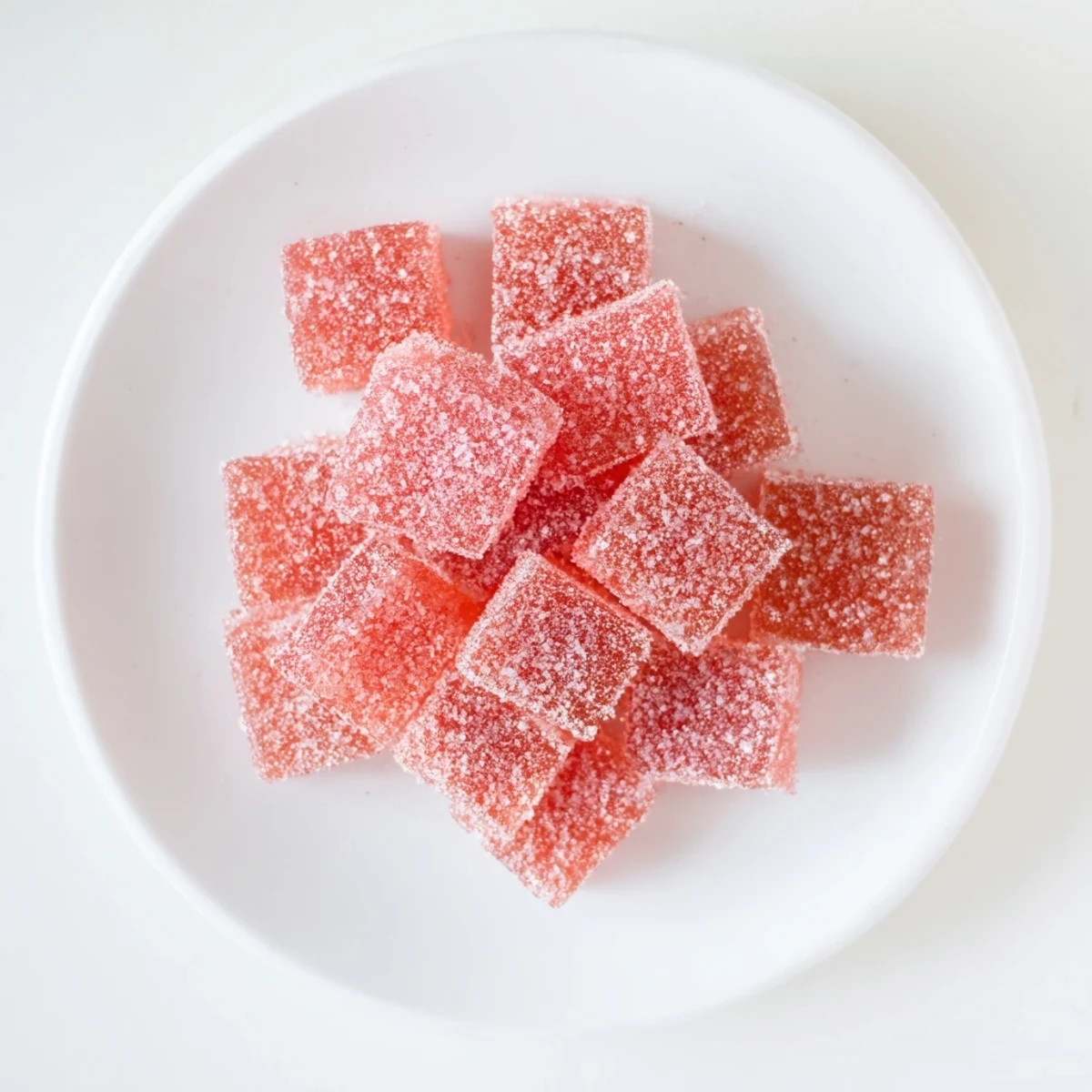
 Pin it
 Create irresistibly chewy treats combining fresh watermelon puree with a tangy sugar coating. These homemade fruit chews deliver the perfect balance of sweet and sour flavors, making them ideal for summer gatherings, party favors, or thoughtful handmade gifts.
The process involves blooming gelatin in strained watermelon juice, heating with corn syrup and sugar until dissolved, then setting overnight before cutting and coating in a citric acid sugar mixture. Each batch yields approximately 40 individual pieces that stay fresh for up to a week when stored properly.
My cousin dared me to make watermelon candy last summer, insisting it could not be done. Two failed batches later, I finally cracked the code with these impossibly chewy, puckeringly tart gems that disappear faster than I can wrap them up.
I brought a batch to a backyard barbecue and watched skeptical faces light up at first bite. My friend Sarah actually hid the container in her bag to take home, claiming she needed to analyze them further.
Ingredients
- Seedless watermelon puree: Strain it twice through cheesecloth for the clearest, smoothest fruit base
- Unflavored gelatin powder: This creates that signature chewy texture, so do not swap it for agar or pectin
- Light corn syrup: Prevents sugar crystals from forming and keeps the chews soft and pliable
- Citric acid powder: Find this in the canning aisle or baking section for authentic sour candy kick
Instructions
- Prep your workspace:
- Lining your pan with parchment and greasing it lightly makes all the difference when it comes time to unmold the candy
- Bloom the gelatin:
- Let the gelatin sit in the fruit mixture for those full 5 minutes or you will end up with grainy chews that do not set properly
- Dissolve everything slowly:
- Keep the heat at medium low and stir constantly until the mixture is completely smooth, but never let it come to a boil
- Let it set completely:
- Room temperature cooling prevents condensation, then refrigerate until the candy feels firm to the touch
- Coat and cut:
- Toss each square in the sour sugar mixture immediately after cutting so the coating sticks evenly to every surface
- Store them right:
- Layer the finished chews with wax paper in an airtight container or they will stick together into one giant blob
 Pin it
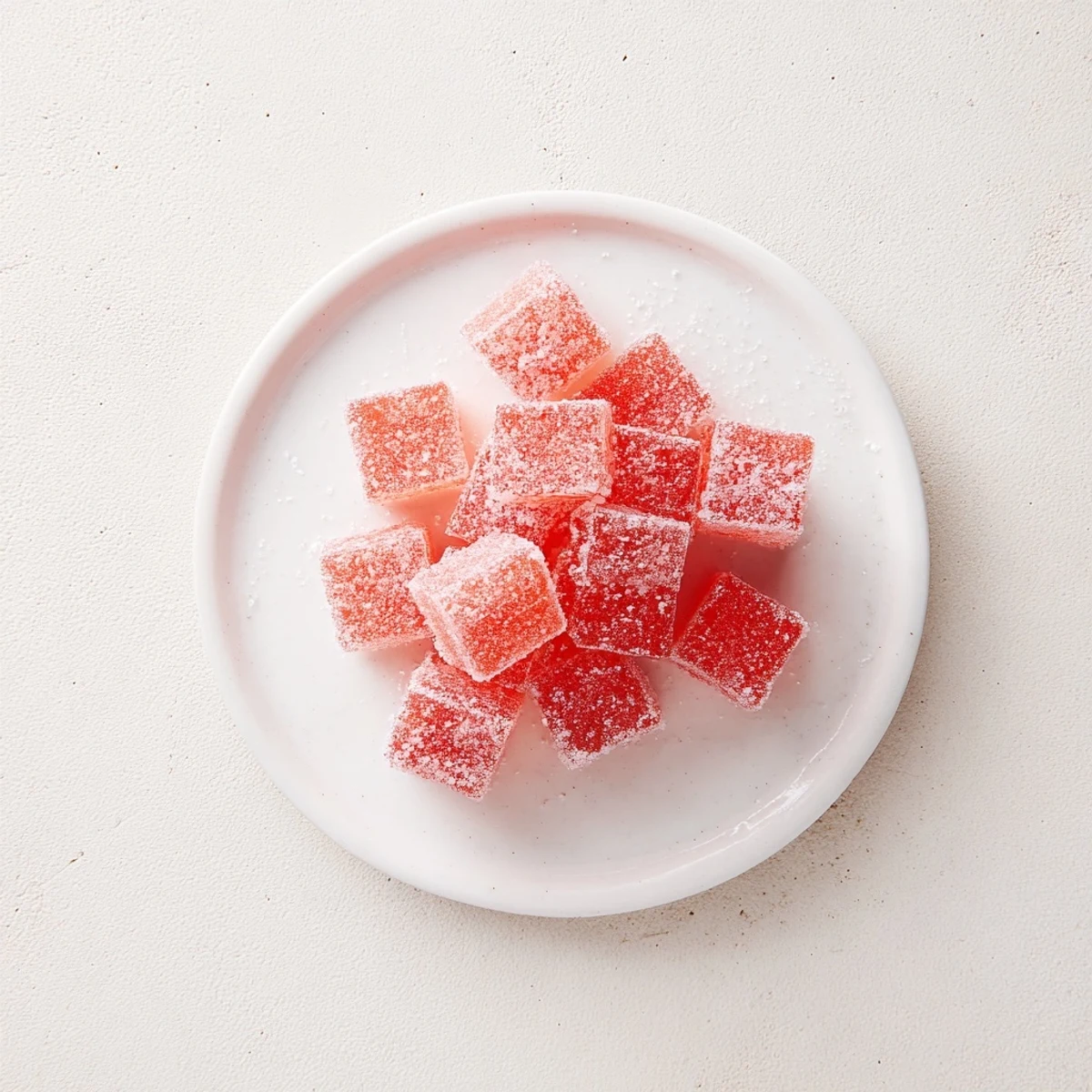
 These have become my go to hostess gift because they feel special and homemade but look like something from a fancy candy shop.
Getting the Perfect Texture
The trick is in the gelatin blooming step. Rush it and your chews turn out weirdly foamy or unevenly set. I learned this the hard way when my first batch looked like pink coral rather than smooth candy squares.
Flavor Variations
Swap the watermelon for strawberry puree and add a drop of vanilla extract. Try mango with lime juice instead of lemon. The formula works beautifully with almost any fruit juice you can strain clear.
Troubleshooting Your Batch
If your chews turn out too soft, you probably did not heat the mixture long enough for the gelatin to fully activate. Too sticky means the humidity was high or they did not cool completely before coating.
- Work quickly when cutting because the candy warms up and gets softer the longer it sits out
- Use a clean sharp knife and wipe it between cuts for the neatest squares
- Double the coating mixture if you like a thicker sour sugar layer on your candy
 Pin it
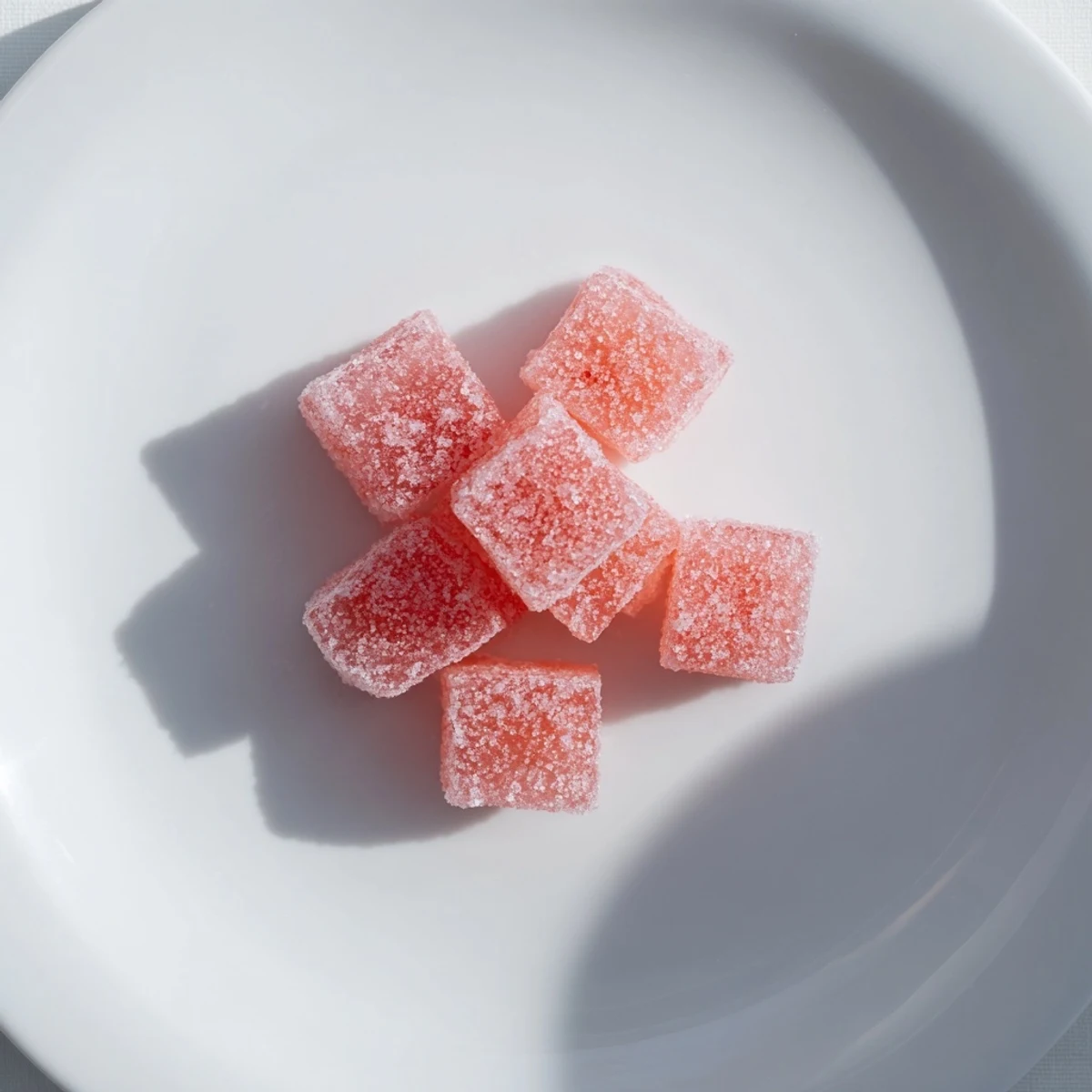
 Wrap little stacks in wax paper tied with twine for an edible gift that makes people feel genuinely special.
Recipe FAQs
- → How do I prevent the gelatin from clumping?
-
Sprinkle gelatin powder gradually over the liquid while whisking gently. Let it bloom for 5 minutes before heating—this allows proper hydration and ensures smooth dissolution without lumps.
- → Can I make these without gelatin?
-
Gelatin provides the signature chewy texture. Agar agar creates a firmer, jelly-like consistency, while pectin yields softer gummies. Results will differ significantly in texture and mouthfeel.
- → Why strain the watermelon puree?
-
Removing pulp and seeds ensures smooth, uniform chews. Strained juice incorporates gelatin evenly, creating consistent texture throughout each piece. Use a fine mesh sieve for best results.
- → How do I adjust the sourness level?
-
Increase citric acid by ½ teaspoon increments for extra tang, or reduce by half for milder flavor. You can also add more lemon juice to the fruit base for additional acidity.
- → Why did my chews turn out sticky?
-
Insufficient coating sugar or high humidity causes stickiness. Ensure each piece is thoroughly coated, and store in a cool, dry place. Adding slightly more citric acid to the coating also helps reduce moisture absorption.
- → Can I use frozen watermelon?
-
Yes, thaw and drain frozen watermelon chunks before pureeing. Frozen fruit releases more water, so you may need slightly less to achieve the correct consistency. Strain well to remove excess liquid.